Why Deep-Cleaning Smelly Bras Matters More Than You Think
Deep-cleaning smelly bras matters more than you think because standard washing fails to remove trapped bacteria, yeast, and oils that accumulate in dense padding and elastic layers, leading to skin irritation, infections, and permanent fabric damage. A thorough deep soak breaks down these residues, restoring hygiene and elasticity while preventing conditions like acne, fungal infections, and contact dermatitis. This method extends the lifespan of your bras by protecting spandex and elastane fibers, making it essential for both your health and wardrobe investment.
Most women toss their bras in the laundry bin without a second thought. That lingering smell is a sign of something more than just sweat.
Quick Verdict: Simply put, deep-cleaning smelly bras is the only way to remove trapped bacteria, yeast, and oils that standard washing leaves behind. These build-ups cause skin irritation, infections, and permanent fabric damage. A deep clean restores the bra’s hygiene and elasticity, making it last longer and keeping your skin healthier.
This guide explains the science behind bra odors and shows you an effective cleaning method. You will learn why deep-cleaning smelly bras matters for your long-term health and wardrobe investment.
Key Takeaways
- Smelly bras are often a sign of bacterial or fungal overgrowth, which can lead to skin issues like acne, fungal infections, and contact dermatitis.
- Regular machine washing is rarely enough to penetrate the dense padding and elastic layers of a bra where odors become trapped.
- Deep-cleaning smelly bras can extend their lifespan by breaking down the oils and residues that degrade spandex and elastane fibers over time.
- Using the right deep-cleaning method with cool water and gentle soaks protects the delicate fabric while effectively neutralizing odors.
- Learning how to deep clean your bras saves you money and reduces textile waste by keeping your expensive undergarments in wearable condition for longer.
What Is Deep-Cleaning a Bra Compared to Regular Washing?
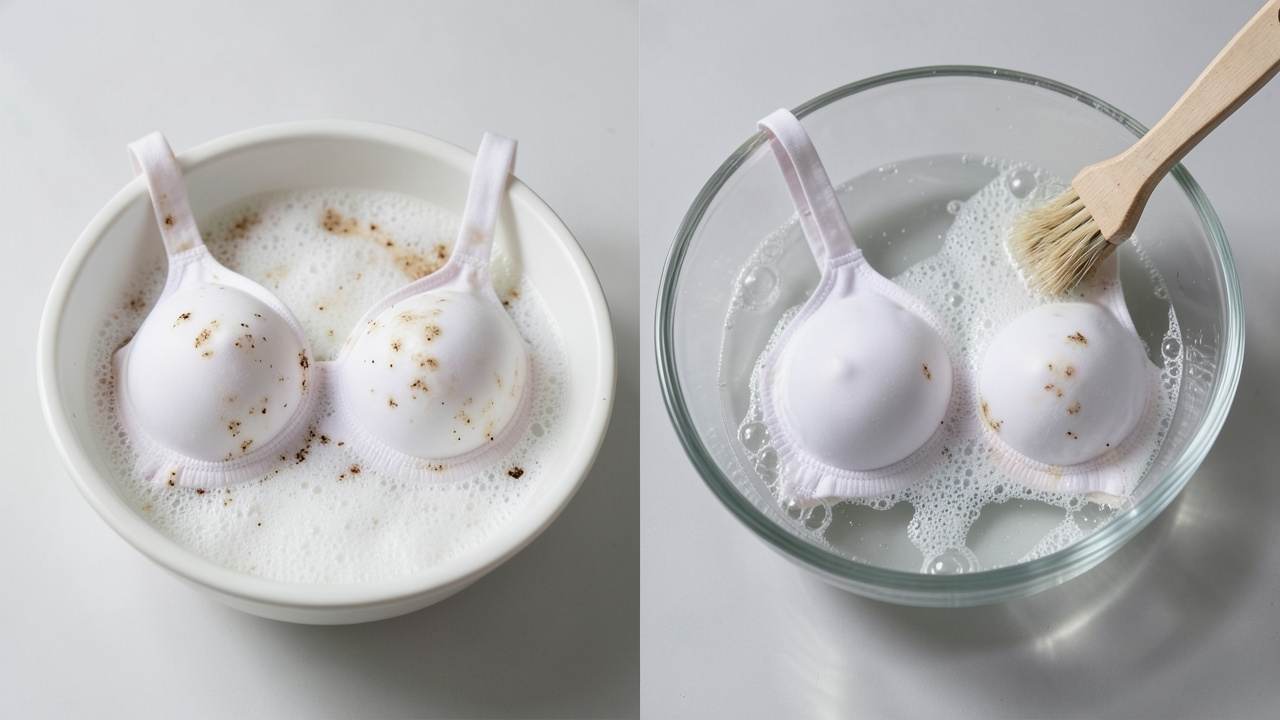
Deep cleaning a bra is a thorough process that goes beyond a standard wash cycle. Standard washing uses water and detergent to remove surface dirt and sweat. Deep cleaning targets the residues trapped deep inside the fabric layers and padding.
Regular washing often fails to remove sebum, body oils, and bacteria that accumulate inside the bra cups and under the band. explains that surfactants in standard detergents need enough contact time to break down oils. A quick machine cycle does not provide this time.
Deep cleaning involves a structured soak with specific ingredients. This process dissolves the build-up of oils, dead skin cells, and bacteria that cause the persistent smell. It restores the fabric to a nearly new condition.
Why Your Bra Gets Smelly in the First Place
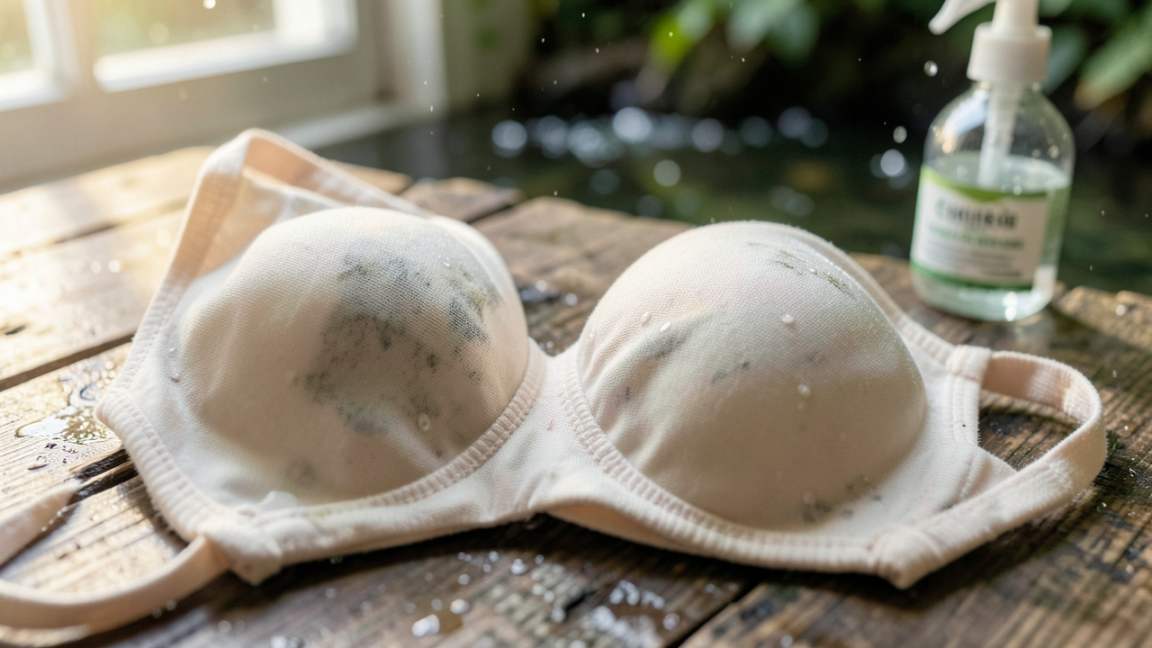
Your bra is a perfect breeding ground for odor-causing microbes. It sits directly against your skin in a warm, dark, and often moist environment. This environment allows bacteria and yeast to multiply quickly.
Human sweat is mostly water, but it also contains salts, ammonia, and urea. When this mixes with the natural oil called sebum from your skin, it creates a rich food source for microbes. According to a study published in the , bacteria like Staphylococcus epidermidis and Micrococcus thrive on synthetic fabrics like polyester and spandex.
These specific fabrics are standard in most modern bras. are excellent at holding onto oils. The study found that synthetic fabrics trap odor-causing bacteria ten times more effectively than natural fibers like cotton.
Important: The underwire and padding in many bras create pockets where bacteria can hide. These areas are hard to reach with standard machine washing, which is why a deep soak method is more effective.
Why Deep-Cleaning Smelly Bras Matters for Your Health
Wearing a smelly bra is not just unpleasant. It can have direct consequences for your skin and overall health. The same bacteria that cause the smell can also cause infections.
reports that trapped sweat and bacteria under bra straps and bands frequently cause common skin problems. These conditions can be painful and difficult to treat if the source of the problem is not removed.
Here are the most common health issues related to unwashed or poorly cleaned bras:
- Fungal infections: Yeast like Candida thrives in the warm, moist area under the breasts. This can lead to a red, itchy rash known as intertrigo.
- Bacterial folliculitis: The hair follicles under the bra band can become infected with bacteria, causing painful red bumps that look like acne.
- Contact dermatitis: The build-up of detergents, fabric softeners, and body oils on the fabric can irritate the skin. This causes a itchy, scaly rash.
- Back and chest acne: The friction of the bra band pushes oil and bacteria into your pores, creating the perfect environment for acne breakouts.
Regular deep cleaning eliminates these risks. It removes the bacteria and yeast that cause these conditions, keeping your skin clear and healthy.
The Damage to Your Bra
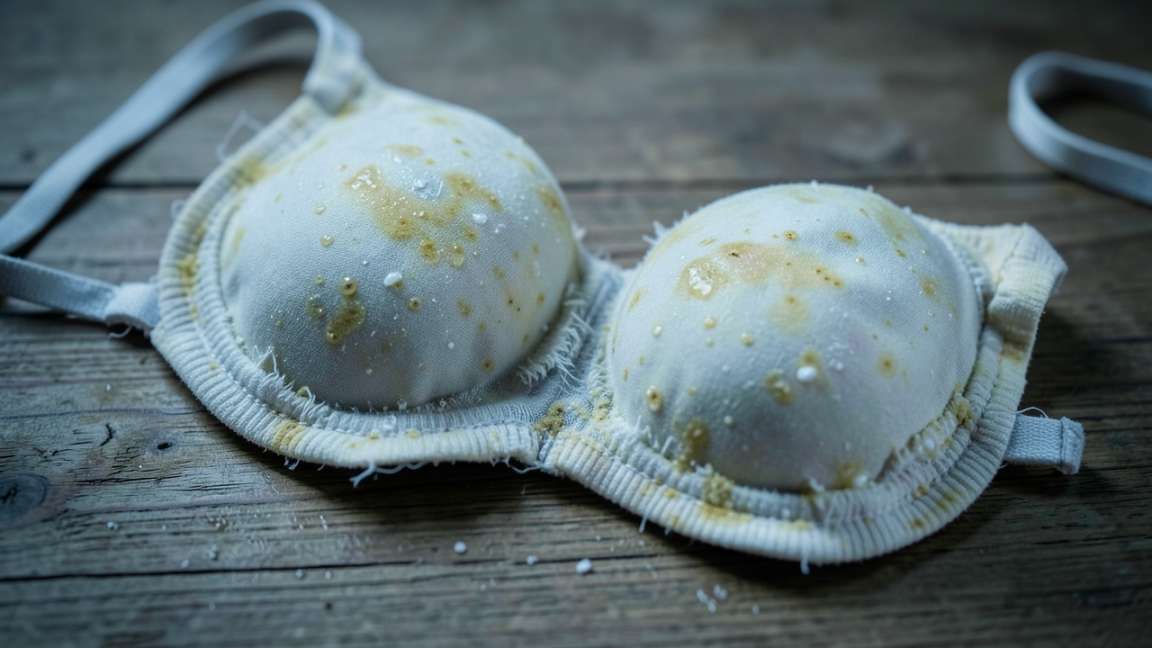
Beyond health concerns, a smelly bra is a sign that the fabric is degrading. The oils, bacteria, and minerals from sweat do not just smell bad. They eat away at the fibers of your bra.
The elastic fibers that provide support are especially vulnerable. Body oils break down the polymer chains in spandex and elastane. This causes the elastic to lose its shape and grip. Once this happens, the bra will not provide proper support.
A good bra is an investment. A quality bra can cost anywhere from fifty to eighty dollars. Deep cleaning extends its life by six to twelve months. This protects your investment and keeps your undergarments functional.
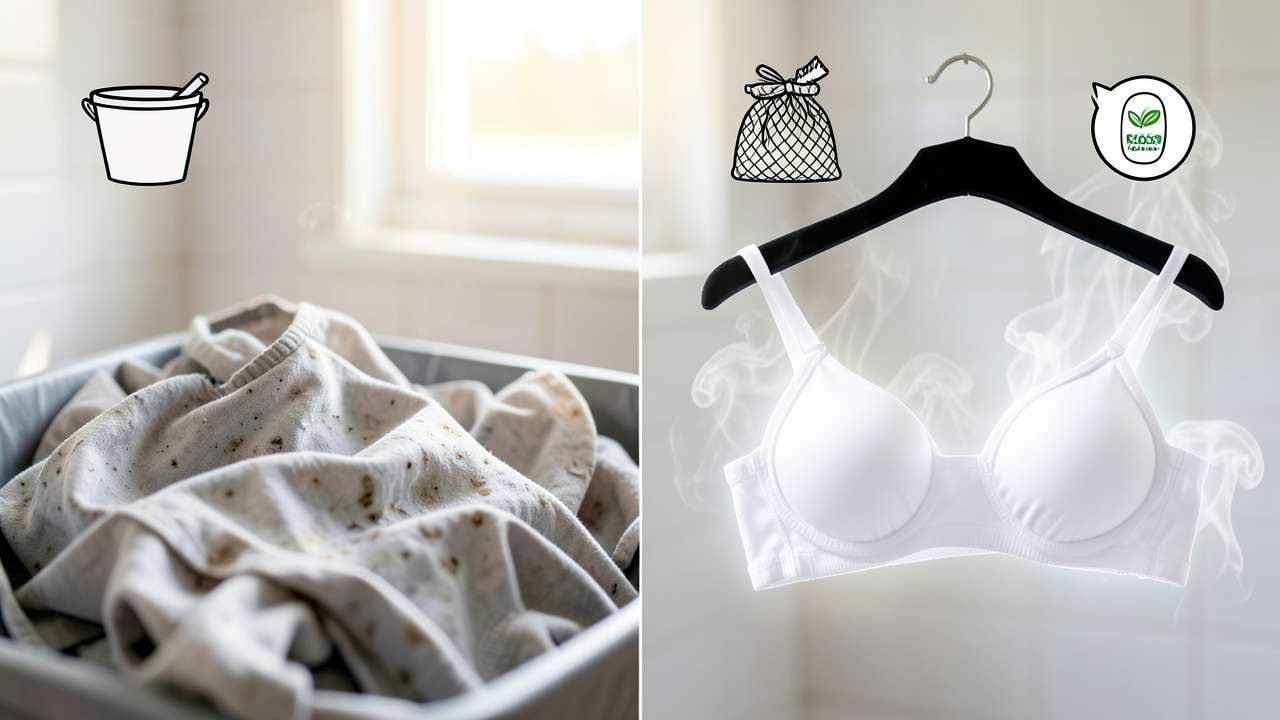
Improper washing makes this problem worse. Using hot water or bleach to kill the smell will destroy the elastic much faster. Heat is the enemy of spandex. The right deep-cleaning method uses cold water to protect the fibers while still removing the odor-causing build-up.
Comparison of Bra Cleaning Methods
| Method | Bacteria Removal | Elastic Safety | Odor Removal | Fabric Wear |
|---|---|---|---|---|
| Standard Machine Wash | Low | Poor | Low | High |
| Deep Soak (Baking Soda) | High | Excellent | High | Low |
| Vinegar Rinse | Medium | Good | Medium | Medium |
| Boiling Water | Very High | Very Poor | Very High | Very High |
The table above shows a clear winner. The deep soak method using baking soda is the best balance of cleaning power and fabric safety. It removes the bacteria and odor without damaging the elastic fibers.
How to Deep-Clean Smelly Bras at Home
Deep cleaning your bras at home is simple and requires only a few common ingredients. Follow this step-by-step process to restore your bras to a fresh, like-new condition.
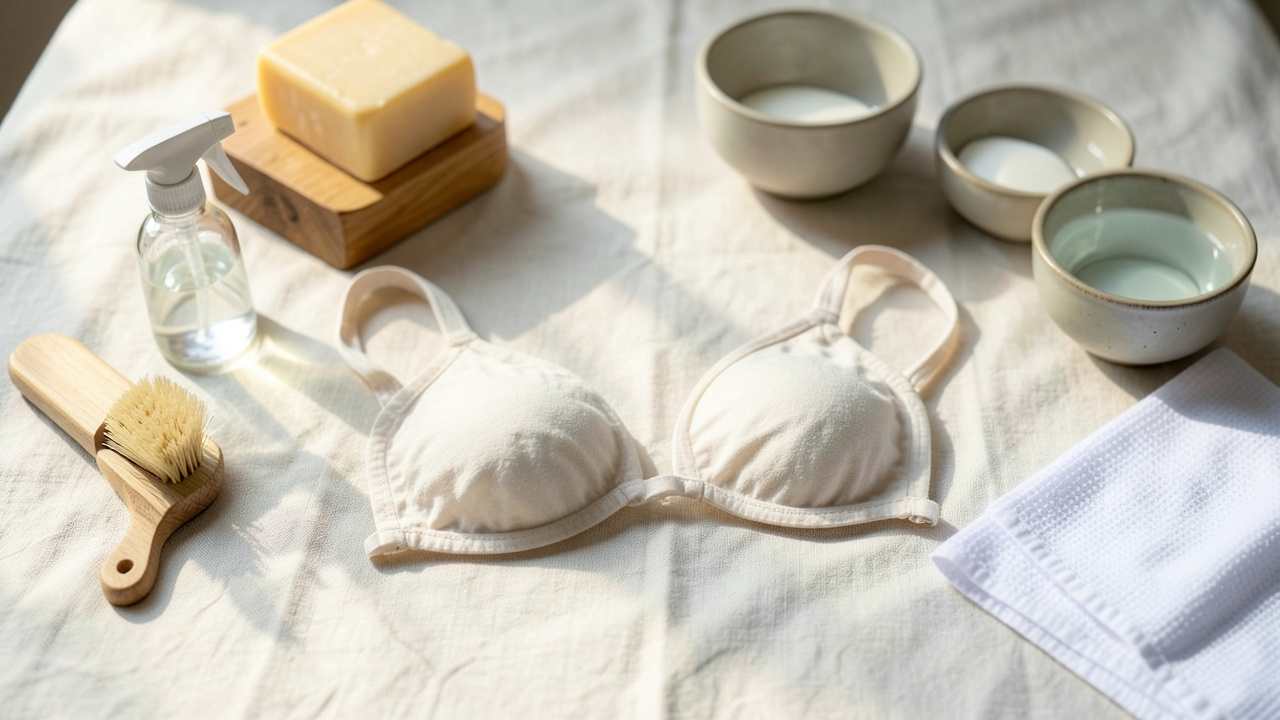
What You Need
- One tablespoon of baking soda
- One teaspoon of a gentle, fragrance-free laundry detergent
- One gallon of cool, cold water
- A clean basin, sink, or bucket
- A clean, dry towel
Warning: Do not use hot water. Heat destroys the spandex and elastane fibers that give your bra its shape and support. Hot water also sets protein-based stains from sweat, making the smell worse over time.
Step 1: Prepare the Soak
Fill your clean basin with one gallon of cold water. Add one tablespoon of baking soda and one teaspoon of gentle detergent. Swish the water with your hand to dissolve the ingredients completely.
Step 2: Submerge the Bras
Place your bras in the water. Push them down gently to make sure they are fully saturated. Let them soak for thirty to sixty minutes. For heavily soiled or very smelly bras, you can soak them for up to two hours.
Step 3: Gently Agitate
After soaking, use your hands to gently swish and squeeze the bras in the water. Focus on the areas that trap the most odor: the underarm area of the band, the bottom of the cups, and any padding. Do not scrub or twist the fabric.
Step 4: Rinse Thoroughly
Drain the soapy water. Rinse the bras under cool running water. Squeeze the water through the cups and band gently. Keep rinsing until all the soap bubbles are gone. Residual detergent can cause skin irritation.
Step 5: Remove Excess Water
Lay a clean, dry towel flat on a surface. Place your rinsed bras on the towel. Roll the towel up gently to press the water out of the bras. Do not wring or twist the bras. This step removes enough moisture for faster drying without damaging the elastic.
Step 6: Air Dry Only
Lay your bras flat on a drying rack or hang them by the center gore (the fabric between the cups). Never use a clothes dryer. The heat will ruin the elastic. Keep your bras out of direct sunlight to prevent fading.
Common Myths vs Facts About Bra Odor
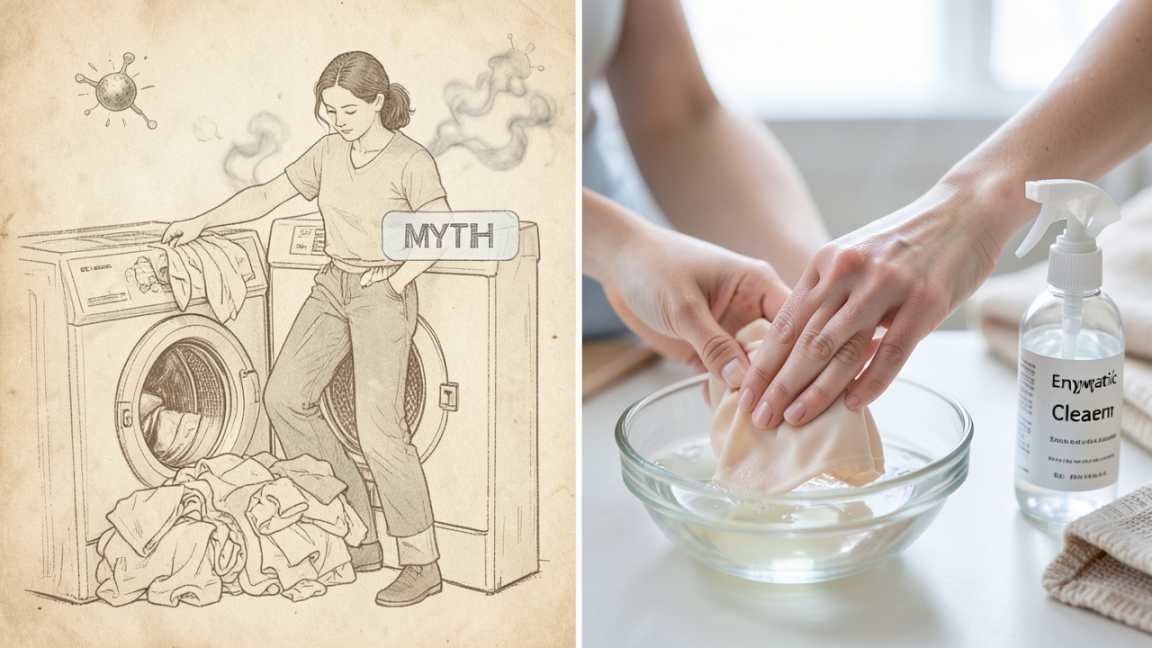
Many common cleaning tips actually damage your bras. Here are the most common myths and the facts that will save your wardrobe.
Myth 1: Boiling water is the best way to sanitize bras
Fact: Boiling bras destroys the elastic fibers instantly. The heat causes spandex to become brittle and lose its stretch. A cold soak with baking soda removes bacteria better and preserves the bra at the same time.
Myth 2: Bleach removes the smell and is safe in small amounts
Fact: Bleach is a harsh chemical that breaks down both the dye and the fibers of your bra. It creates a chemical reaction that can turn white bras yellow and weaken colored fabrics. It also causes skin irritation for many people.
Myth 3: A machine wash on the delicate cycle is the same as deep cleaning
Fact: The delicate cycle is better than a normal cycle, but it is still not deep cleaning. The short wash time and low agitation do not allow the surfactants to break down the stored oils and bacteria inside the bra padding. A soak is required for that.
Resources and Tools for Bra Care
Use these resources to learn more about textile care and maintaining your bras.
- American Cleaning Institute – Offers a comprehensive guide on laundry science and fabric care best practices.
- American Academy of Dermatology – Provides detailed information on skin conditions caused by friction and bacteria, including folliculitis and contact dermatitis.
- Wikipedia – Spandex Fiber Care – Explains the chemical composition of elastane and why it is sensitive to heat and chlorine.
- ThirdLove Bra Care Guide – A practical guide from a major lingerie brand on how to wash and store bras to extend their lifespan.
Frequently Asked Questions
How often should I deep clean my bras?
You should deep clean your bras once every four to six weeks. This schedule removes the build-up of body oils and bacteria that a standard machine wash leaves behind. If you sweat heavily or work out in your bras, deep clean them every two weeks.
Can I use vinegar to deep clean my bras?
Yes, distilled white vinegar is a good alternative for the soak. Use one part vinegar to four parts cold water. Vinegar helps break down detergent residue and kills some bacteria. However, baking soda is gentler on the elastic fibers and works better for heavy odor.
What is the best way to dry a bra after deep cleaning?
The best way to dry a bra is to lay it flat on a clean, dry towel or on a mesh drying rack. Always keep bras away from direct heat and sunlight. Never put a bra in a tumble dryer. The intense heat will permanently damage the elastic.
Will deep cleaning fix a bra that still smells after washing?
Yes, a targeted deep clean is specifically designed for this problem. The long soak in baking soda breaks down the trapped oils and bacteria that cause the smell. If the smell remains after a deep clean, the bra may be too old and the fibers may be permanently degraded.
Can I deep clean sports bras the same way?
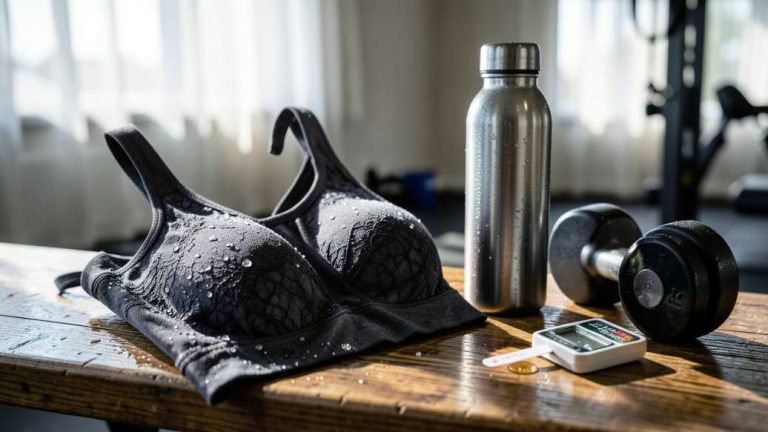
Yes, the same soak method works well for sports bras. Sports bras often have more synthetic fibers and thicker padding, so they trap even more bacteria. The deep clean process is essential for sports bras to remove odor and restore elasticity.
Final Thoughts
Deep cleaning your bras is a simple habit that protects your skin and extends the life of your wardrobe. The cold soak method with baking soda removes the bacteria and oils that cause smells and fabric damage. Make this technique part of your regular routine, and your bras will stay fresh, supportive, and comfortable for much longer.