Why Musty Smell in Stored Underwear Is Important for Comfort
A musty smell in stored underwear is important for comfort because it directly indicates trapped moisture and microbial growth that compromise fabric breathability and cause skin irritation. Wearing underwear with residual odor increases the risk of contact dermatitis, yeast infections, and general discomfort, as the odor-causing bacteria thrive in humid storage conditions. Eliminating the musty smell restores the fabric’s natural breathability and ensures a healthy fit against the skin, making odor-free storage a practical necessity for both hygiene and comfort.
You open your drawer and notice a stale, musty smell on your clean underwear. This odor is not just a minor annoyance; it signals underlying issues that directly impact your skin health and overall comfort.
Simply put, a musty smell in stored underwear signals trapped moisture, microbial growth, or fabric degradation. These factors directly cause skin irritation, rashes, and discomfort. Eliminating the odor is not just about freshness; it is about restoring the fabric’s breathability and ensuring a healthy, comfortable fit against your skin.
Key Takeaways
- Musty smells in stored underwear are caused by trapped moisture, bacteria, and yeasts that thrive in dark, humid storage conditions.
- Wearing underwear with residual odor can lead to contact dermatitis, yeast infections, and general skin discomfort.
- Natural fibers like cotton are more prone to odor absorption than synthetics, but both require proper storage to stay fresh.
- Using breathable storage containers and moisture absorbers helps prevent odor and maintains fabric comfort.
- Effective odor removal methods include washing with vinegar, sun drying, and using activated charcoal in storage.
Important: The connection between musty smell and comfort is direct. The same biology that creates the odor also changes how the fabric feels against your skin.

Why Does Stored Underwear Develop a Musty Smell?
According to the, the average human body secretes 0.8 to 1.4 liters of sweat daily. This moisture soaks into underwear fibers even during light activity. When you store underwear without complete drying, residual moisture creates a breeding ground for bacteria and fungi.
The identifies dark, humid environments as prime areas for microbial growth. Your dresser drawer can become this environment if clothes are stored while slightly damp. The main culprits are Staphylococcus epidermidis and Corynebacterium, which break down sweat into volatile organic compounds.
These compounds produce the distinct musty or sour smell. The odor is a direct chemical signal that bacteria are present. Ignoring this signal means ignoring a potential source of skin irritation.
| Cause | Source | Effect on Comfort |
|---|---|---|
| Trapped Moisture | Incomplete drying & sweat | Fabric stiffness and chafing |
| Bacterial Growth | Staphylococcus & Corynebacterium | Itching and contact dermatitis |
| Fungal Growth | Mold spores & Candida | Rash and infection risks |
| Fabric Degradation | Cellulose breakdown in cotton | Loss of softness and breathability |
Tip: Always run a second spin cycle on your washing machine if your clothes feel damp after the first one. This extra step removes more moisture and cuts drying time significantly.

How Does Musty Smell Affect Comfort?
A musty smell indicates chemical changes on your skin. The bacteria produce ammonia and fatty acids that react with your skin’s natural pH. This reaction can cause immediate stinging or itching.
According to the, occlusive clothing combined with microbial byproducts can worsen conditions like folliculitis and eczema. Wearing contaminated underwear traps these irritants against your skin for hours. This is a primary reason why musty smell in stored underwear directly reduces your comfort.
There are four key ways this odor affects your daily experience:
- Musty odors signal volatile organic compounds that can trigger contact dermatitis on sensitive skin.
- Compromised fabric breathability leads to heat rash and sweat buildup throughout the day.
- The psychological discomfort of smelling stale odors reduces confidence and satisfaction.
- Synthetic fibers trapping oil and bacteria create a rougher texture against sensitive skin.
Warning: Do not use scented dryer sheets or fabric sprays to cover up musty odors. They mask the smell without killing the bacteria. The irritants remain on the fabric and still contact your skin.

What Is the Science Behind Odor and Fabric Comfort?
Moisture management is the key factor. When fibers hold onto water, they lose their structural softness and become abrasive. A study from the found that cotton fibers swell when wet, reducing their air permeability by up to 50%. This directly traps heat and moisture against the skin.
The musty smell in stored underwear is a sign of this moisture problem. Bacteria need water to survive. If the fabric stays wet for too long, bacterial colonies grow exponentially. The resulting odor is the waste product of these microorganisms.
Here are the main fabric types and how they react to moisture:
- Cotton – Absorbs a lot of moisture, swells, and dries slowly. High risk for musty smells.
- Bamboo – Absorbs moisture but wicks it away from the skin. Moderate risk.
- Polyester – Repels water but traps oil. Bacteria love the oil. Different smell, same risk.
- Nylon – Low absorbency but creates a non-breathable microclimate. High risk for fungal growth.
- Merino Wool – Wicks moisture and has natural antimicrobial properties. Low risk.
The ideal storage environment keeps humidity low and airflow high. This prevents the microbial growth that leads to odor and discomfort. Understanding this science helps you choose both the right fabrics and the right storage methods.
What Are the Best Storage Practices for Odor-Free Underwear?
Proper storage prevents the conditions that cause odor and fabric degradation. Start by ensuring every piece is fully dry before it goes into the drawer. Even 1% residual moisture can start the process.
The recommends keeping indoor humidity below 60% to prevent mold and mildew growth. Use a dehumidifier in your closet if you notice persistent musty odors. This simple change protects both your clothes and your comfort.
Follow these do’s and don’ts for underwear storage:
| Do | Don’t |
|---|---|
| Use breathable cotton bags or linen drawer liners | Store in airtight plastic bins or ziploc bags |
| Add a cedar block or activated charcoal bag | Use perfumed sachets that only mask odors |
| Ensure clothes are 100% dry before storing | Store in damp basements or humid bathrooms |
| Rotate your stock regularly | Keep underwear for years without airing it out |
Key Info: Activated charcoal is a passive odor absorber. It works by trapping odor molecules in its porous structure. Replace the bag every 2-3 months for best results.
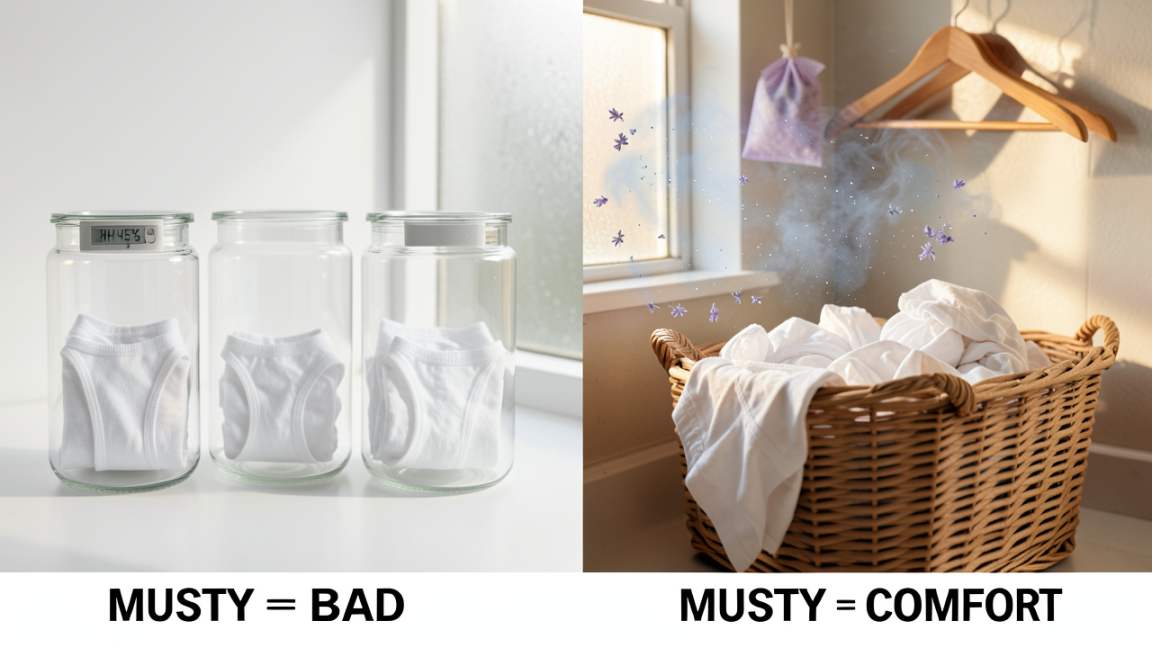
Common Myths vs Facts
Many people misunderstand the link between smell and comfort. Let’s clear up the most common misconceptions.
Myth 1: Musty smell is just a sign that the underwear is old.
Fact: Musty smell is a sign of microbial activity or trapped moisture, not necessarily aging fabric. Proper washing and drying can restore freshness to old underwear.
Myth 2: If the smell disappears after wearing it for a few minutes, it is fine.
Fact: The bacteria and residues are still on the fabric. They absorb your body heat and reactivate, which often worsens discomfort over the day.
Myth 3: Only synthetic fabrics hold onto smells.
Fact: Cotton is hydrophilic and absorbs more moisture, making it a prime reservoir for bacteria if not fully dried. Synthetics resist absorption but trap oil against the skin.

How to Remove Musty Smell from Stored Underwear
If you already have a musty smell, do not throw the underwear away. Most odors can be removed with the right method. Start with the simplest solution: sunlight.
Sunlight is a natural disinfectant. Hang the underwear in direct sunlight for 2-3 hours. The UV rays break down odor-causing compounds and kill bacteria. This method is free and highly effective.
For tougher odors, use vinegar. Soak the underwear in a solution of one part white vinegar to four parts water for 30 minutes. Then wash as normal. Vinegar neutralizes the ammonia compounds produced by bacteria.
Follow these steps for stubborn odors:
- Soak in a vinegar solution (1:4 ratio) for 30 minutes to break down bacterial waste.
- Wash on a hot water cycle (60 degrees Celsius or 140 degrees Fahrenheit) to kill bacteria.
- Add half a cup of baking soda to the wash cycle to neutralize remaining acids.
- Dry in direct sunlight or in a high-heat dryer to remove all moisture.
- Store with an activated charcoal bag to prevent future odors.
Warning: Do not use bleach on delicate underwear fabrics like lace or modal. Bleach breaks down elastic fibers and can make the fabric rougher, which reduces comfort.
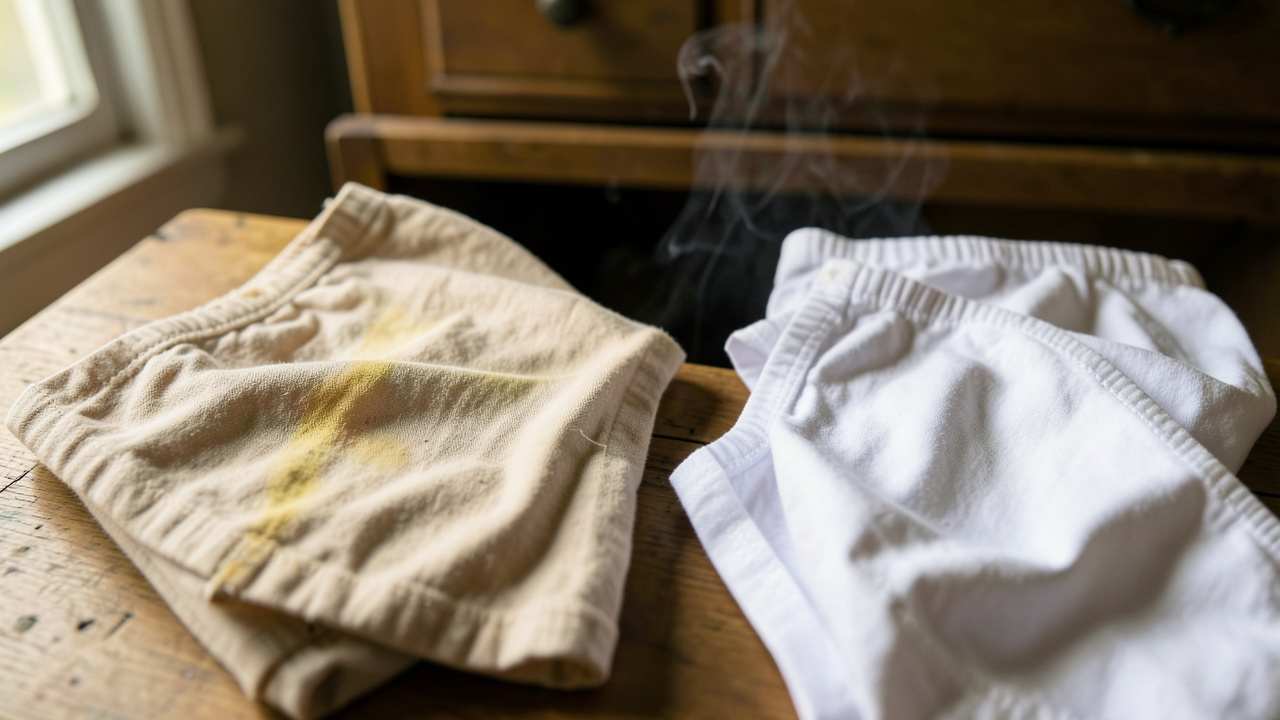
When Should You Replace Underwear?
Even with perfect care, underwear does not last forever. The fibers degrade over time, and they begin to hold onto bacteria more easily. A survey by indicates that many people keep underwear for 1-2 years, but fabric fibers degrade and hold onto bacteria over time, directly impacting comfort.
Look for these signs that it is time to replace your underwear:
- The elastic waistband is loose or twisted.
- The fabric has visible thinning or holes.
- The musty smell returns immediately after washing.
- The fabric feels rough, stiff, or less breathable than before.
- You experience recurring skin irritation with that specific pair.
Replacing old underwear is not wasteful. It is an investment in your daily comfort and skin health. The musty smell in stored underwear is often a sign that the fabric’s structure has broken down enough to harbor bacteria permanently.
Frequently Asked Questions
Is musty smell in stored underwear harmful?
Yes, it can be. The musty smell comes from bacteria and fungi that can cause skin irritation, contact dermatitis, and yeast infections. According to the, wearing contaminated clothing can transfer pathogens to sensitive skin areas.
How do I remove musty smell from underwear without washing?
Sunlight is the best option. Hang the underwear in direct sunlight for 2-3 hours. Sunlight breaks down odor-causing compounds and kills bacteria. Using an bag in the storage drawer also absorbs odors without washing.
Does fabric type affect how fast musty smell develops?
Yes, significantly. Cotton absorbs more moisture, so it creates a breeding ground faster than synthetics. Synthetic fabrics like polyester trap oil and bacteria, which can cause a different, often sour, odor. The key factor is how quickly the fabric dries after wearing or washing.
Can I use baking soda to remove musty odors?
Yes. Create a paste with baking soda and water, apply it to the affected fabric, and let it sit for 30 minutes before washing. Baking soda neutralizes the volatile organic compounds responsible for the musty smell.
How often should I replace stored underwear?
You should replace underwear every 6-12 months if you notice persistent odor after washing. Fabric fibers degrade and hold onto bacteria over time, directly impacting comfort. When the smell returns immediately after a wash, it is time to buy new pairs.
Final Thoughts
Musty smell in stored underwear is a clear warning sign about your fabric’s condition. It points to moisture, bacteria, and fabric breakdown that directly reduce your comfort. By focusing on proper drying and breathable storage, you protect your skin and extend the life of your clothing. Prioritizing this small habit makes a big difference in your daily comfort.