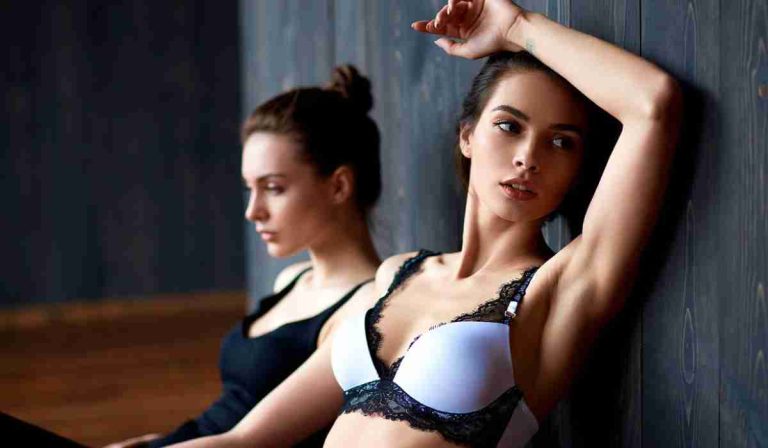
Why Most Women Wear The Wrong Bra Size?
It’s really common for many women to end up wearing the wrong bra size. This can happen for lots of reasons, especially when you’re new to buying bras. Things like changing bodies, confusing sizing charts, and even just not knowing what to look for can make it tricky.
But don’t worry! We’re going to make it super simple to figure out your perfect fit. Get ready for easy steps that will help you find the right bra every time.
Key Takeaways
- You will learn why bra sizing can be confusing for many women.
- We will cover the main reasons why women often wear the wrong bra size.
- You will discover simple ways to measure yourself accurately at home.
- We will explain how different bra parts affect fit and comfort.
- You will get tips on how to tell if a bra truly fits well.
- You will learn about common bra fitting mistakes to avoid.
Why Most Women Wear the Wrong Bra Size
Finding the right bra size is more important than many people think. A bra that fits well can make you feel comfortable and supported all day long. It can also help your clothes look better and boost your confidence.
But, a bra that is too tight, too loose, or just plain wrong can be uncomfortable and even cause pain. It’s a common problem, and understanding Why Most Women Wear the Wrong Bra Size can help you avoid this hassle.
The Hidden Problem of Ill-Fitting Bras
Many women go through their lives wearing a bra that isn’t the right size. This isn’t usually anyone’s fault. Bra sizing can be confusing.
Brands use different measurements. Also, our bodies change over time. What fit perfectly a year ago might not fit today.
This can lead to issues like straps digging in, bands riding up, or cups gapping.
Sometimes, women just get used to the discomfort. They might think it’s normal to adjust their bra straps constantly or feel like the underwire is poking them. These are all signs of a bra that doesn’t fit right.
The good news is that finding your correct bra size is achievable.
Common Reasons for Wearing the Wrong Bra Size
Let’s look at the main reasons why this issue is so widespread.
Confusing Sizing Systems
Different bra brands often have slightly different sizing charts. What is a 36C in one brand might be a 34D in another. This makes it hard to know what size to buy, especially when shopping online or trying a new brand.
Without a consistent standard, it’s easy to pick the wrong size.
Body Changes
Our bodies are not static. They change due to weight fluctuations, hormonal shifts, pregnancy, and aging. Even small changes can affect how a bra fits.
A bra that fit perfectly a few months ago might suddenly feel too tight or too loose. Many women forget to re-measure themselves when their body shape changes.
Incorrect Measurement Techniques
Many women measure their bra size incorrectly. They might measure too loosely or too tightly. They might also measure in the wrong place.
For example, measuring the band too high or too low can lead to an inaccurate band size. Similarly, not measuring the bust correctly can result in the wrong cup size.
Misunderstanding Bra Components
A bra has several parts: the band, the cups, and the straps. Each part plays a role in the fit. The band should be snug and parallel to the floor.
The cups should contain the breast tissue fully without any spilling or gapping. The straps should stay in place without digging into the shoulders. When any of these components are off, the overall fit is wrong.
Assuming Your Size Never Changes
This is a big one. Many women are fitted for a bra once, perhaps in their teens or early twenties, and then continue to buy that same size for years. They assume their size is fixed.
But as mentioned, bodies change. Not updating your bra size as your body evolves is a primary reason for a poor fit.
Buying for Appearance Over Fit
Sometimes, women are drawn to a bra because of its color, style, or how it looks on the hanger. They might prioritize aesthetics over how the bra actually feels and fits. A pretty bra that pinches or sags isn’t a good choice, no matter how nice it looks.
Not Trying On Bras Properly
Even when women do try on bras, they might not do it correctly. They might not adjust the straps or fasten the band properly. They might also not move around enough in the fitting room to see how the bra performs during everyday activities.
How to Find Your Correct Bra Size
Now that we know why it’s tricky, let’s make it simple. You can find your perfect bra size right at home with a few basic tools.
Step 1: Measure Your Band Size
You will need a soft measuring tape. You can also use a string and a ruler if you don’t have a tape measure.
- Position the tape: Wrap the measuring tape around your ribcage, directly under your bust. Make sure the tape is snug but not digging in. It should be parallel to the floor all the way around.
- Read the measurement: Note the number where the tape overlaps. If you’re using a string, mark where it overlaps and then measure the string with a ruler.
- Find your band size: Most bra band sizes are even numbers. If your measurement is an odd number, round up to the nearest even number. For example, if you measure 31 inches, your band size is likely 32. If you measure 33 inches, your band size is likely 34.
Step 2: Measure Your Bust Size
This measurement helps determine your cup size.
- Position the tape: Wrap the measuring tape around the fullest part of your bust. Again, make sure the tape is snug but not too tight. Keep it parallel to the floor.
- Read the measurement: Note the number where the tape overlaps.
Step 3: Calculate Your Cup Size
Your cup size is the difference between your bust measurement and your band measurement.
- Subtract your band size measurement from your bust size measurement.
- Use the chart below to find your cup size based on the difference in inches:
| Difference (Bust – Band) | Cup Size |
|---|---|
| 1 inch | A |
| 2 inches | B |
| 3 inches | C |
| 4 inches | D |
| 5 inches | DD/E |
| 6 inches | DDD/F |
For example, if your band measurement is 34 inches and your bust measurement is 37 inches, the difference is 3 inches. This means you are likely a 34C.
Step 4: Try It On and Check the Fit
Once you have your estimated size, it’s time to try on a bra. Even with measurements, trying it on is key.
- The Band: Fasten the bra on the loosest hook. The band should feel snug and sit parallel to the floor. You should be able to fit two fingers comfortably under the band. If it’s too loose, it will ride up. If it’s too tight, it will dig in.
- The Cups: Your breasts should be fully contained within the cups. There should be no spilling out the top or sides. The center gore (the part between the cups) should lie flat against your chest. If the cups are too small, you’ll see “quad-boobing” (breasts spilling over the top). If they are too big, you’ll see wrinkling or gaping.
- The Straps: The straps should stay up without digging into your shoulders. They provide some lift but are not the primary support. If the straps are doing all the work, the band is likely too loose. Adjust the straps so they are comfortable.
- The Underwire: The underwire should encircle your breasts and lie flat against your ribcage. It should not poke you in the armpit or dig into your breast tissue.
Walk around, raise your arms, and bend over. Does the bra stay in place? Does it feel comfortable?
These movements will tell you if the bra truly fits well.
Common Fitting Mistakes to Avoid
Even after measuring, people make mistakes. Here are some to watch out for.
- Assuming your old size still fits: As we discussed, bodies change. Re-measure regularly.
- Buying based on brand alone: Always try on a bra, even if it’s a brand you usually wear.
- Forgetting to check the back: A bra that looks fine from the front might be riding up in the back, indicating the band is too loose.
- Ignoring comfort: A bra should feel good. If it pinches, chafes, or digs, it’s not the right fit, no matter what the label says.
- Focusing only on cup size: The band size is actually more important for support. A band that’s too loose will make the cups fit poorly.
Frequently Asked Questions
Question: How often should I measure my bra size?
Answer: It’s a good idea to measure yourself at least once a year, or whenever you notice changes in your body weight or shape. Hormonal changes, pregnancy, and breastfeeding can also significantly alter your size.
Question: What if my measurements suggest one size but another feels more comfortable?
Answer: While measurements are a great starting point, your comfort is the ultimate guide. Sometimes bra styles fit differently, or your body shape might not perfectly match standard sizing. Trust how the bra feels when you try it on.
Adjusting strap tightness or using a bra extender can also help fine-tune the fit.
Question: My bra straps keep falling down. What does that mean?
Answer: This usually means your bra band is too loose. The band provides most of the support. If the band isn’t snug, the straps have to do all the work, and they will slip.
Try a smaller band size or try fastening your current bra on tighter hooks.
Question: I have a gap between my breast and the top of the cup. Is this normal?
Answer: No, a gap usually means the cup size is too large. Your breasts aren’t filling the cup completely. Try a smaller cup size, but make sure your band size is still correct.
Question: Why does the underwire dig into my armpit?
Answer: This can happen if the bra band is too wide, or the cups are too small and pushing the wire outwards. It can also be due to the style of the bra; some bras have wider cups or wires than others. Ensure the wire lies flat against your rib cage, not on your breast tissue or further out.
Final Thoughts
Finding the right bra size is simple when you know how. It’s not about having a specific number but about how the bra feels and fits your unique body. Remember to measure your band and bust correctly, calculate your potential cup size, and most importantly, try bras on.
Check the band, cups, and straps. Your bra should support you comfortably all day. Don’t settle for a bra that doesn’t feel right.