Innerwear Storage for Busy Lifestyles: A Complete Guide
Innerwear storage for busy lifestyles involves using drawer dividers, vertical folding, and breathable organizers to minimize dressing time and maintain garment longevity. This system reduces morning stress by allowing you to grab matching pairs in seconds while preventing fabric damage from moisture or overcrowding. Key elements include sorting by type, measuring drawers, assigning zones, and using cotton or bamboo materials to keep undergarments organized with minimal daily upkeep.
Your morning routine sets the tone for the entire day. Innerwear storage for busy lifestyles matters because it saves time and reduces stress when you are already in a hurry.
Quick Verdict: Innerwear storage for busy lifestyles means using drawer dividers, vertical folding, and breathable organizers to cut dressing time and keep your undergarments organized with minimal daily effort. The right system helps you grab what you need in seconds and extends the life of your clothing.
When your underwear drawer is a mess, you waste precious minutes digging for matching pairs. You also risk damaging delicate fabrics. An organized system fixes both problems.
This guide covers everything you need to know. You will learn which storage products work best, how to set up your drawers, and how to maintain the system when life gets hectic.
Key Takeaways
- Vertical folding lets you see every item at a glance and keeps your drawer neat without re-folding.
- Breathable storage materials like cotton and bamboo prevent moisture buildup and extend the life of your innerwear.
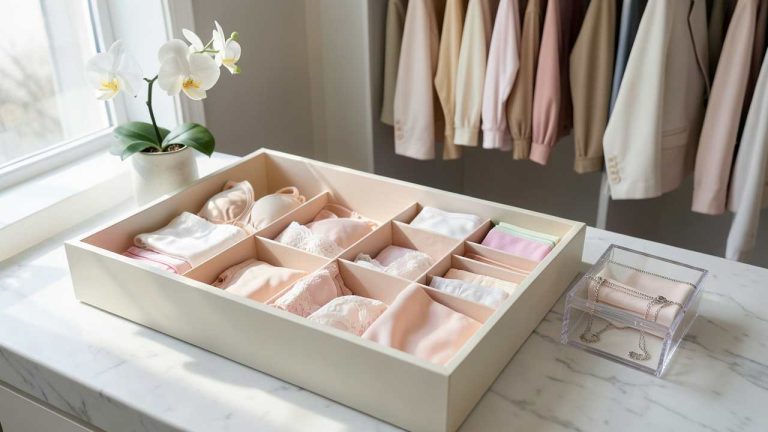
- Drawer dividers create dedicated zones for bras, underwear, socks, and loungewear so you can find items faster.
- A 10-minute weekly reset keeps your storage system working even during the busiest weeks.
- Vacuum-seal bags work well for seasonal items but should not be used for daily-use innerwear because they trap moisture.
What Is Innerwear Storage?
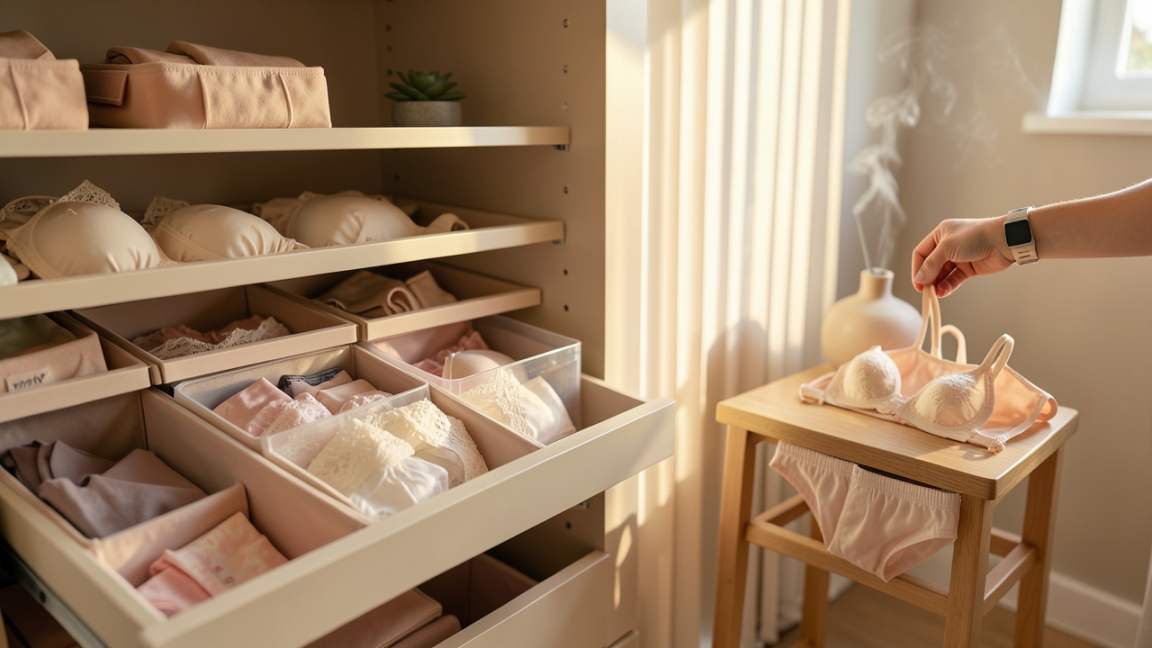
Innerwear storage refers to the systems and products you use to organize bras, underwear, socks, shapewear, and loungewear. Unlike general closet organization, innerwear storage focuses on small, delicate items that need special care.
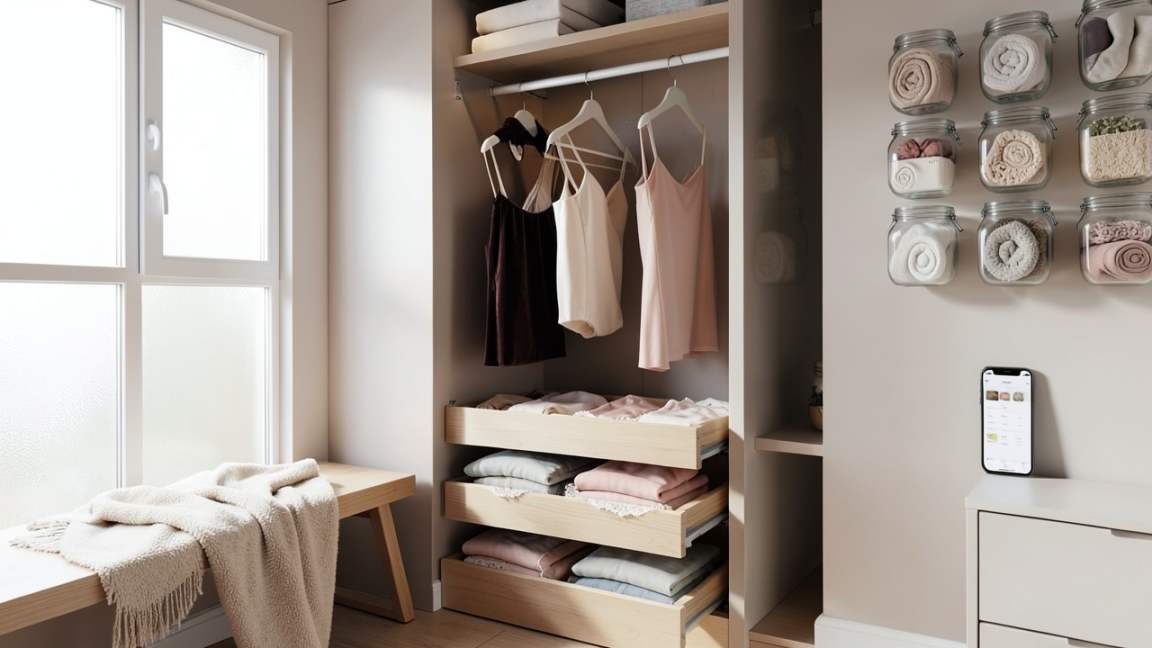
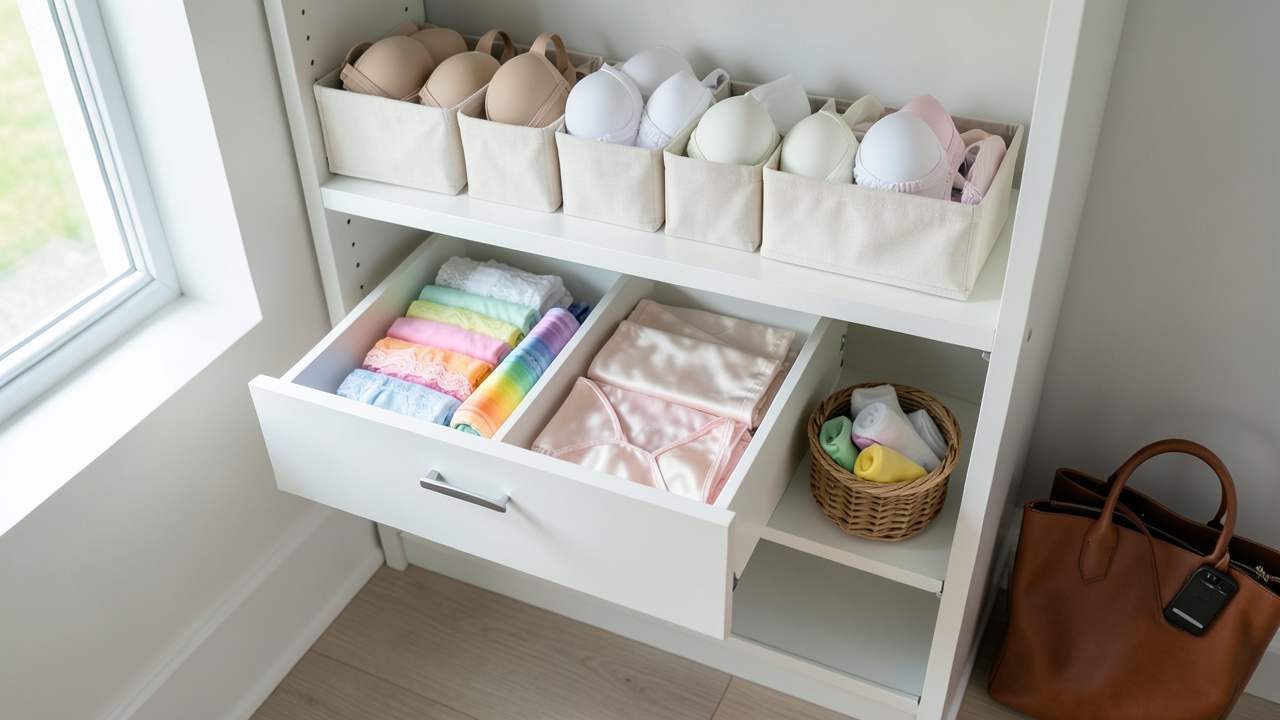
Common solutions include drawer dividers, compartment organizers, hanging fabric shelves, and vacuum-seal bags. The best system depends on your drawer size, the types of innerwear you own, and how much time you want to spend maintaining it.
Why Busy Lifestyles Need Dedicated Storage
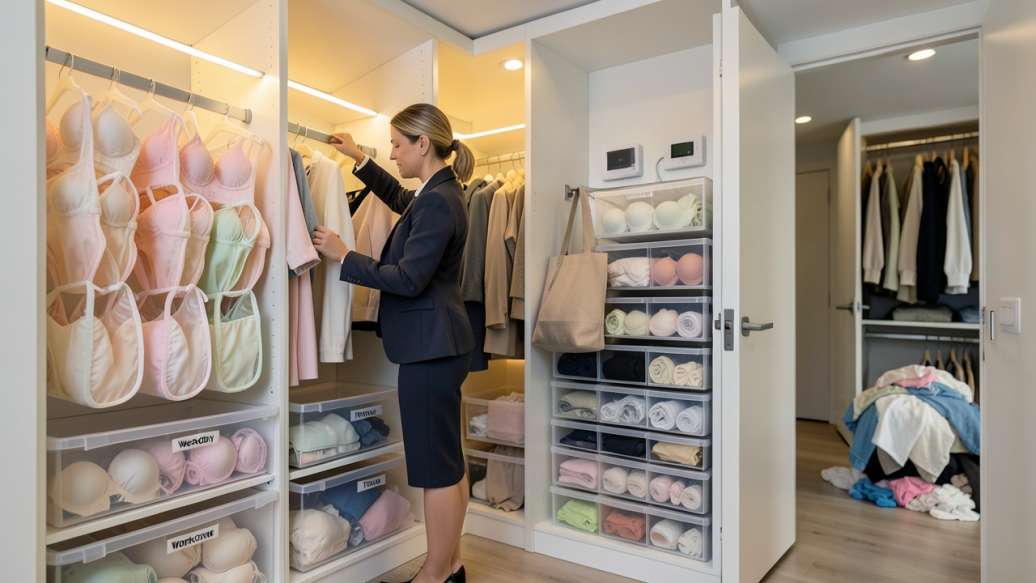
When you are busy, every second counts. A messy drawer forces you to hunt for items, try on mismatched pieces, and re-fold things you pulled out by accident. Over a month, those wasted minutes add up to hours.
According to a survey by IKEA, 42 percent of people say they wish they had better storage solutions for small items like undergarments. According to the American Cleaning Institute, proper fabric storage extends the life of garments by up to 50 percent. That means less shopping and less waste.
A dedicated innerwear storage system gives you three key benefits:
- Speed. You grab what you need in seconds without searching.
- Longevity. Proper folding and storage prevent fabric damage and elasticity loss.
- Peace of mind. An organized drawer reduces morning anxiety and helps you start the day calm.
Types of Innerwear Storage Solutions
Several products exist to help you organize innerwear. Each one works best for specific needs and drawer configurations.
| Solution Type | Best For | Drawer Size Needed | Typical Price Range |
|---|---|---|---|
| Drawer Dividers | Customizable sections for different items | Any size | $10 – $30 per set |
| Compartment Organizers | Bras, underwear, socks | Medium to large | $15 – $40 |
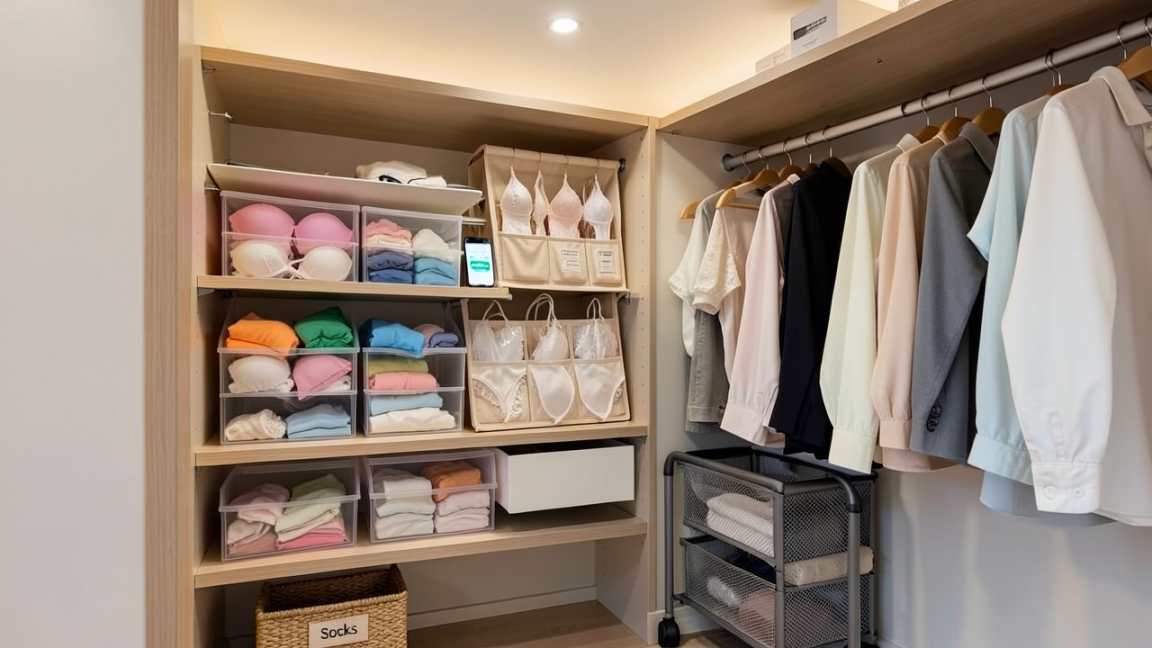
| Hanging Fabric Shelves | Limited drawer space, closets | Not needed | $12 – $25 |
| Vacuum-Seal Bags | Seasonal storage, travel | Closet or under-bed | $10 – $20 per pack |
| Fabric Storage Boxes | Loungewear, shapewear, bulk items | Shelf or drawer | $8 – $20 each |
Important: Always choose breathable materials like cotton, bamboo, or mesh for daily-use storage. Plastic and non-breathable fabrics trap moisture and can cause mildew or fabric damage over time.
Step-by-Step Process to Organize Your Innerwear
Follow these steps to set up a system that works for your busy lifestyle.
Step 1: Declutter and Sort
Take everything out of your drawers. Check each piece for stains, holes, stretched elastic, or broken straps. Toss anything that is worn out or uncomfortable.
Sort the remaining items into piles:
- Bras (everyday, sports, and special occasion)
- Underwear (briefs, boxers, thongs, bikinis)
- Socks (no-show, crew, athletic, and dress)
- Shapewear and bodysuits
- Loungewear and sleepwear
Warning: Do not keep innerwear with broken elastic or permanent stains. These items take up space and make your drawer feel cluttered. Replace them as needed to maintain a functional wardrobe.
Step 2: Measure Your Drawers
Measure the width, depth, and height of each drawer. Write these numbers down. When you buy organizers, check the product dimensions to ensure a good fit.
Most standard dresser drawers are 15 to 20 inches wide and 14 to 18 inches deep. If your drawers are smaller or deeper than average, look for adjustable dividers rather than fixed compartments.
Step 3: Choose Your Organizers
Based on your drawer measurements and the types of innerwear you own, pick the right organizers. Here is a quick guide:
- For underwear and socks, use compartment organizers with small cells.
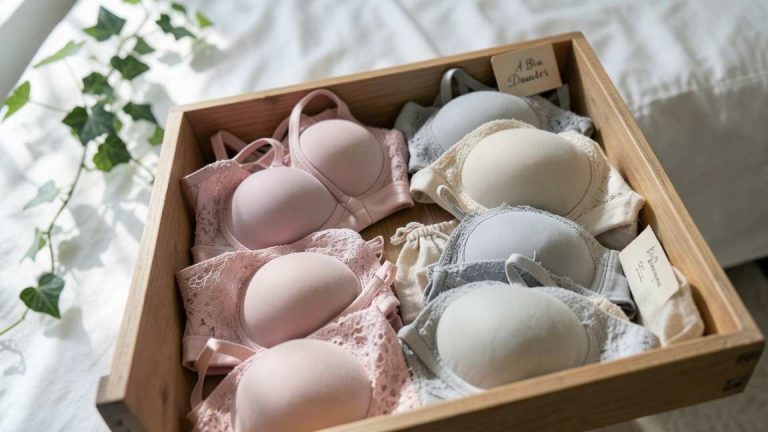
- For bras, use wide dividers or dedicated bra organizers that keep cups nesting.
- For shapewear and loungewear, use fabric boxes or larger compartments.
- For travel and seasonal storage, use vacuum-seal bags.
Step 4: Fold Using the Vertical Method
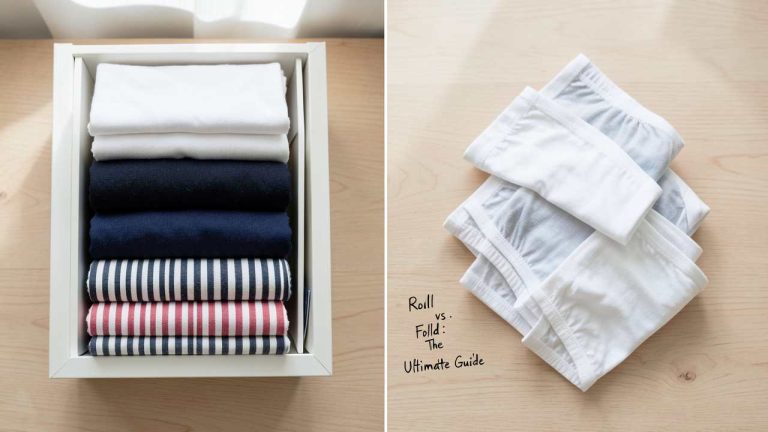
Vertical folding (also called file folding) is the best technique for busy people. It lets you see every item at a glance. You can grab one piece without disturbing the rest.
- Lay the item flat and smooth out wrinkles.
- Fold it in half or thirds to create a small rectangle.
- Stand the rectangle on its edge in the drawer.
- Arrange items side by side so all edges are visible.
This method works for underwear, socks, and even lightweight bras. For bras with underwire, stack cups inside each other rather than folding.
Step 5: Assign Zones in Each Drawer
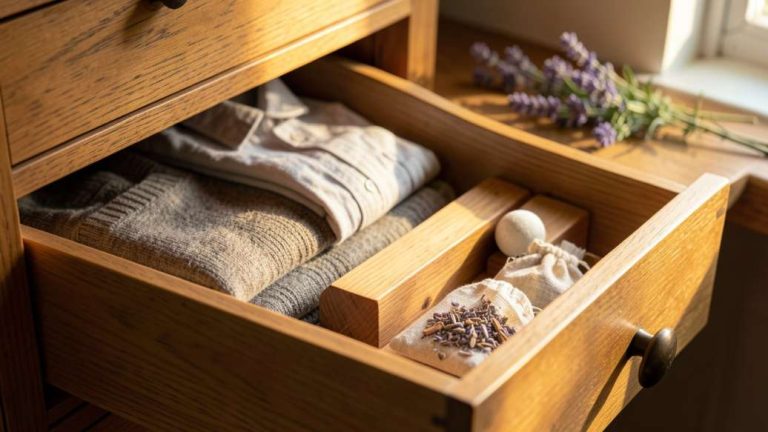
Create dedicated zones for each category. For example, the top left section holds everyday underwear. The top right holds socks. The bottom section holds bras.
Label the zones if you share drawers with a partner. Use small adhesive labels or clip-on tags. This makes it easy for everyone to put items back in the right spot.
Step 6: Set a Weekly Reset Routine
Busy schedules make it easy to let the system slide. Set aside 10 minutes each week to reset. During this time, re-fold items, check for wear, and return stray pieces to their correct zones.
Tip: Combine your weekly reset with laundry day. Fold items immediately when they come out of the dryer. This prevents wrinkled piles from building up on top of the dresser.
Costs and Timeline
Setting up a complete innerwear storage system costs between $30 and $100. The price depends on how many drawers you need to organize and the quality of the products you choose.
| Item | Estimated Cost | Time to Set Up |
|---|---|---|
| Decluttering and sorting | $0 | 30 – 45 minutes |
| Measuring drawers | $0 | 10 minutes |
| Buying organizers | $20 – $60 | 20 – 30 minutes shopping |
| Folding and placing items | $0 | 20 – 30 minutes |
| Weekly reset | $0 | 10 minutes per week |
The total setup time is about 1.5 to 2 hours. After that, you only need 10 minutes per week to maintain the system. This small investment pays off every morning when you find what you need in seconds.
Common Myths vs Facts
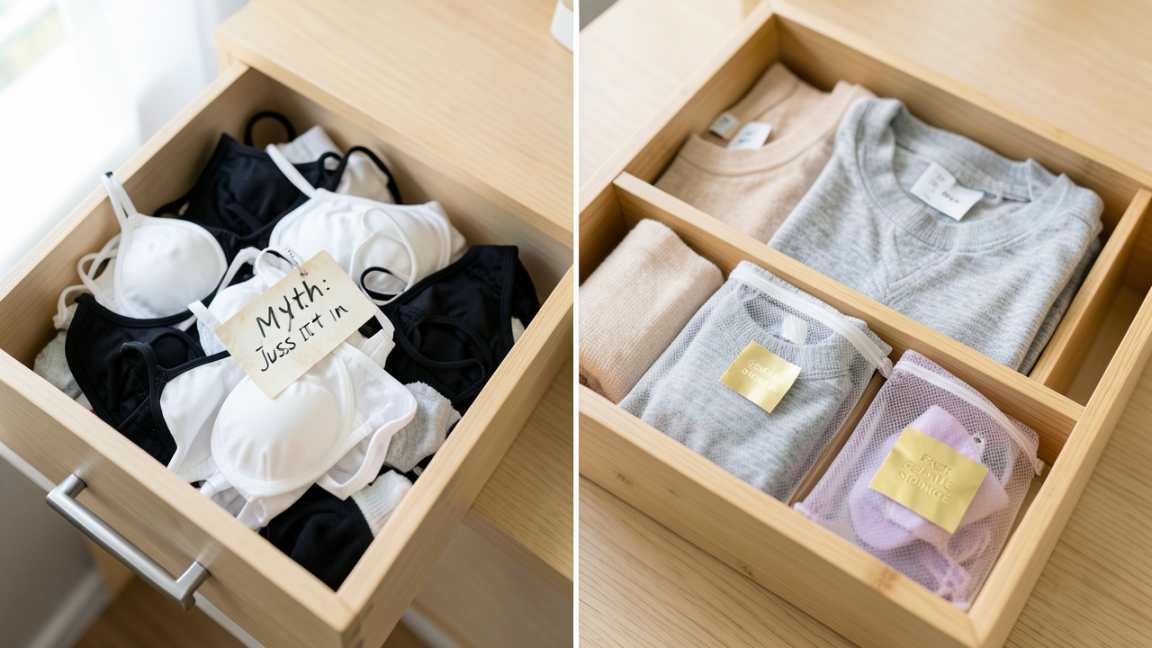
Myth 1: You need expensive custom organizers for good innerwear storage.
This is false. Budget-friendly options from,, and Amazon work just as well as expensive custom systems. The key is proper folding and zoning, not the price tag.
Myth 2: Vacuum-seal bags are the best storage for all innerwear.
Vacuum-seal bags work for seasonal items like heavy socks and thermal underwear. However, daily-use innerwear needs breathable storage. Compressing delicate fabrics for long periods can damage elastic fibers and cause moisture buildup.
Myth 3: Organizing innerwear is too time-consuming for busy people.
This myth comes from trying to organize without a system. With vertical folding and drawer dividers, the initial setup takes under two hours. The weekly reset takes only 10 minutes. That is less time than you currently spend hunting for mismatched socks each morning.
Pro Tips for Maintaining Your System
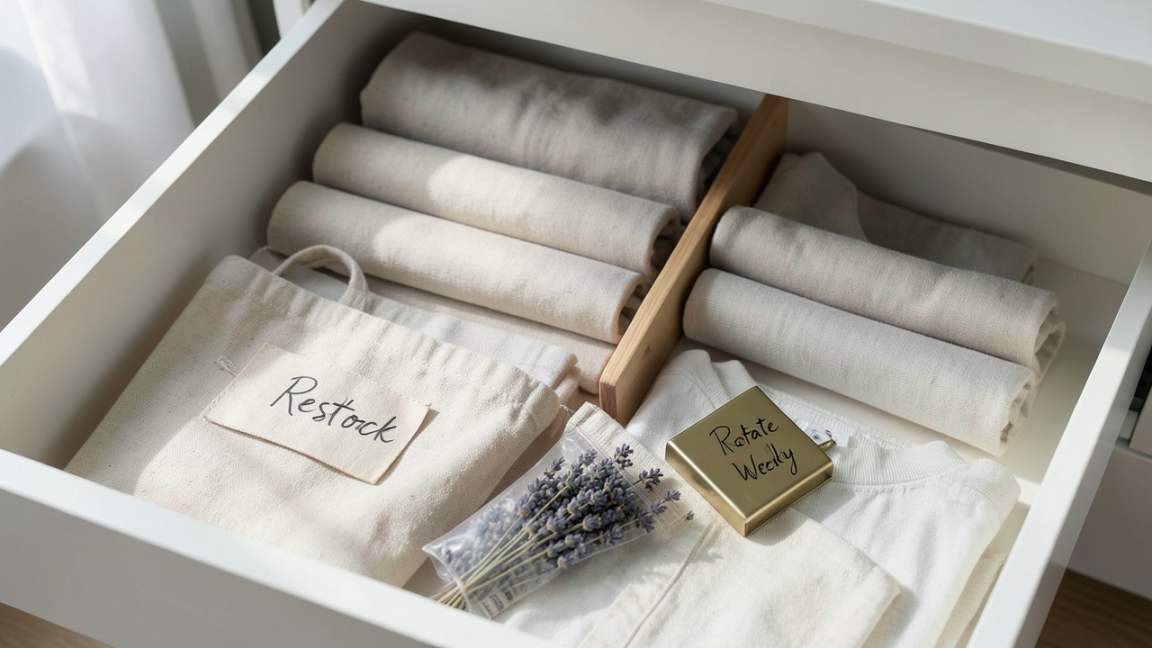
- Rotate seasonal items. Store heavy socks and thermal underwear in vacuum-seal bags during warmer months. Swap them out when the season changes.
- Use the KonMari method for folding. Marie Kondo’s vertical folding technique works especially well for underwear and socks. It keeps everything visible and accessible.
- Buy matching hangers for bras. If you do not have enough drawer space, use padded hangers for bras. Hang them in your closet by size or color.
- Keep a donation bag in your closet. When you find items you no longer wear, put them in the bag immediately. This prevents clutter from accumulating.
- Replace worn items as you declutter. Every time you do a weekly reset, check elastic bands and fabric quality. Replace any pieces that show signs of wear.
Important: Store bras with cups nesting inside each other rather than folding them in half. This preserves the shape of the cups and prevents permanent creases in the fabric.
Choosing the Right Storage Products
Not all storage products are created equal. Here are factors to consider when shopping for organizers.
Material
Look for breathable materials like cotton, bamboo, or mesh. Avoid plastic and nylon for daily-use storage because they trap moisture. For travel, silicone or plastic bags are fine for short periods.
Size and Adjustability
Measure your drawers before buying. Adjustable dividers are better than fixed compartments because you can customize the layout. Some organizers come with movable walls that let you resize sections as your wardrobe changes.
Durability
Check customer reviews for durability. Some cheap dividers collapse under the weight of heavy items. Look for sturdy materials like solid wood, thick cardboard with fabric covering, or rigid plastic.
Ease of Cleaning
Choose organizers that are easy to wipe down or machine washable. Fabric boxes with removable liners are ideal. Avoid complicated designs with hard-to-reach corners.
Resources and Tools
- IKEA Skubb Box Set – A set of fabric boxes in various sizes. Great for loungewear and shapewear.
- The Container Store Drawer Dividers – Customizable adjustable dividers that fit most standard dressers.
- Amazon Basics Mesh Organizers – Affordable mesh compartment organizers for underwear and socks. Breathable and easy to clean.
- Marie Kondo’s The Life-Changing Magic of Tidying Up – A book that explains the vertical folding method in detail.
- Real Simple Magazine – Offers regular tips on closet and drawer organization.
Frequently Asked Questions
How often should I replace my innerwear?
According to the American Cleaning Institute, you should replace undergarments every 6 to 12 months. Elastic loses its shape over time, and fabric can harbor bacteria even with regular washing.
Is it better to fold or roll innerwear for storage?
Vertical folding works better than rolling for most innerwear. Rolling works for socks and travel but makes it harder to see items in a drawer. Vertical folding keeps everything visible and prevents wrinkles.
Can I store bras in a drawer without dividers?
Yes, but dividers help keep bras organized and prevent cups from getting crushed. Without dividers, bras stack on top of each other and lose their shape. Use wide dividers or dedicated bra organizers for best results.
How do I store shapewear and bodysuits?
Fold shapewear gently and place it in a fabric box or a large compartment divider. Avoid folding it in half because that creates permanent creases. For bodysuits, hang them on padded hangers to maintain their shape.
What is the best way to store socks?
Use a compartment organizer with small cells. Fold each pair of socks together using the vertical folding method. Stand them on their edges so you can see the pattern or color of each pair without pulling them apart.
Final Thoughts
Innerwear storage for busy lifestyles is about systems that save you time and pressure every morning. Vertical folding, drawer dividers, and a 10-minute weekly reset keep your drawers organized without adding extra chores to your schedule. Start with one drawer today and build a system that fits your life.