Underwire Bra Cups: A Complete Guide That Actually Works
Underwire bra cups use a thin, flexible wire sewn into the bottom of the cup to create a structured frame that lifts and separates breast tissue, providing superior support compared to wireless options. The wire must lie flat against the sternum and follow the infra-mammary fold without poking or digging in, while the band carries about 80 percent of the breast’s weight for proper fit. Different cup shapes, including balconette, plunge, full coverage, and demi, cater to various support and coverage needs, and the scoop-and-swoop technique ensures breast tissue is fully enclosed for comfort.
Underwire bra cups can feel like a mystery – some women love the lift, while others just feel the poke. This guide breaks down exactly how underwire bras work and how you can get a perfect fit every time.
Simply put, underwire bra cups use a thin, flexible wire sewn into the bottom edge of the cup to create a structured frame. This frame lifts and separates breast tissue, providing significantly more support and shape than wireless bras. For comfort, the wire must sit flat against your sternum and follow the crease where your breast meets your chest wall.
Key Takeaways
- The underwire must lay completely flat against your sternum (the center gore) to provide the correct structural support and prevent breast tissue from escaping.
- Your band carries approximately 80% of the weight of your breasts, making a snug, level band the most critical component for underwire comfort.
- The wire must fully encircle your breast tissue, resting gently in the infra-mammary fold without pinching, poking, or digging in.
- Different underwire cup shapes – balconette, plunge, full coverage, and demi – are engineered for specific breast shapes and different neckline requirements.
- A correct fitting resolves over 90% of all underwire discomfort issues, from poking wires to straps that slip off your shoulders.
What Are Underwire Bra Cups?
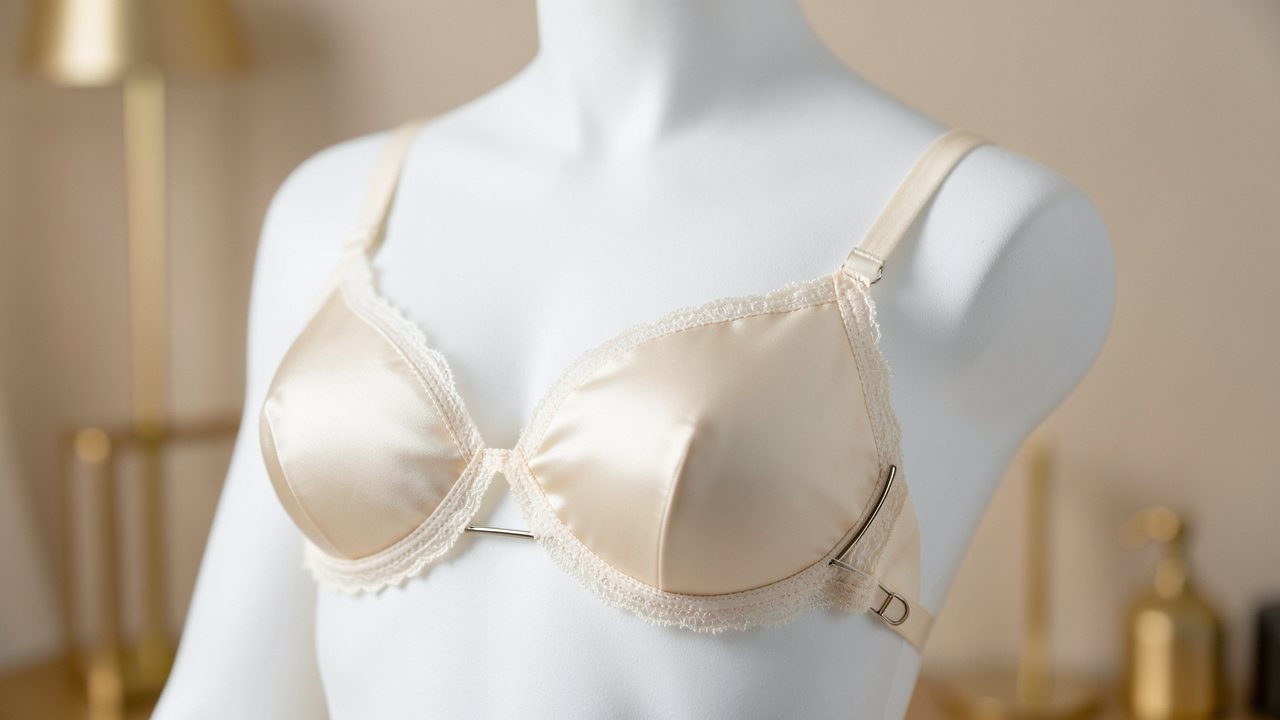
Underwire bra cups are bras that incorporate a thin, flexible piece of metal or plastic sewn into the fabric channel at the base of the cup. This wire forms a supportive cradle that follows the natural curve of your breast tissue.
The wire is typically made from coated steel or resin. It runs from the center gore (the bridge between your breasts), curves under your breast, and extends up the side toward your armpit. This structure distributes the weight of your breasts more evenly across your rib cage and back.
According to market research from The NPD Group, underwire bras account for over 60% of the total bra market in the United States. This dominance is due to the unique support they offer. Unlike wireless bras, which rely solely on fabric compression, an underwire bra creates separation and projection. This makes it easier to achieve a smooth, lifted silhouette under clothing.
How Do Underwire Bra Cups Work?
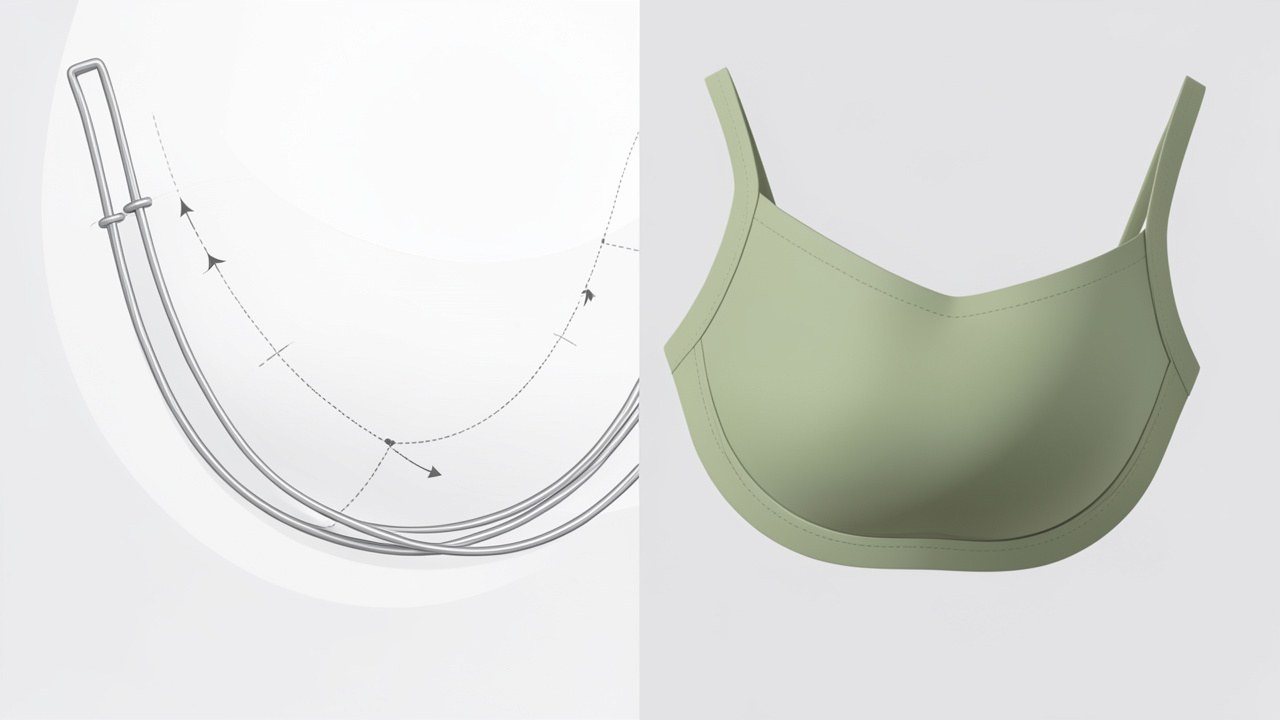
An underwire functions like a structural beam in a building. It creates a rigid frame that holds the cup open. This prevents your breasts from being flattened against your chest. Instead, the wire lifts your breasts forward and upward.
The band is the primary anchor. If your band is too loose, it will ride up your back. This causes the underwire to tilt downward and dig into your ribs. When the band is snug, it holds the wire firmly in place against your torso. A study in the Journal of Sports Sciences found that a well-fitted support bra can reduce breast movement by 50-60%. This shows the importance of a firm band and cup fit.
The center gore is another key indicator of performance. A good fit means the gore lies flat against your sternum with no floating or tipping. If the gore does not tack (touch your breastbone), your cup size is likely too small or your band is too large. According to a widely cited study in the Journal of Chiropractic Medicine, up to 80% of women wear the wrong bra size. This explains why so many women experience underwire discomfort.
Types of Underwire Bra Cups
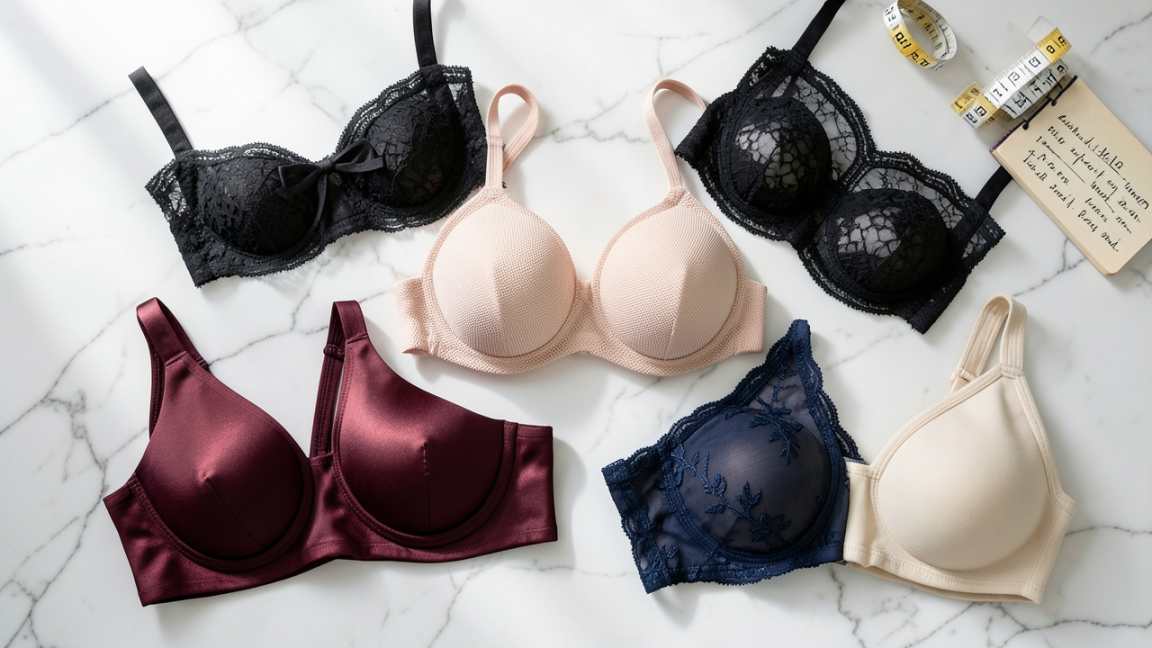
Not all underwire cups are the same. Different cup shapes are designed for different breast shapes and clothing styles. Choosing the right shape is just as important as choosing the right size.
| Cup Type | Support Level | Best For | Neckline |
|---|---|---|---|
| Full Coverage | Maximum | Larger busts, maximum support and containment | High neck, crew neck |
| Balconette | Medium to High | Full-on-bottom breasts, wide roots, creating a lifted shelf | Square neck, scoop neck |
| Plunge | Medium | Full-on-top breasts, close-set breasts, lower necklines | Deep V-neck, plunging neckline |
| Demi (Half Cup) | Low to Medium | Shallow breasts, wide-set breasts, petite frames | Boat neck, off-shoulder |
Here is a quick breakdown of each type you will encounter when shopping for underwire bra cups.
- Full Coverage: These cups cover almost your entire breast. They offer the most support and shaping. They work best for women with larger busts who need maximum containment and a smooth look under t-shirts.
- Balconette: The cups are cut horizontally across the middle. This creates a lifted, shelf-like shape. It is excellent for women with full-on-bottom breast shapes and wider roots.
- Plunge: The center gore is very low. This allows you to wear deep V-neck tops and dresses without showing your bra. Plunge cups push your breasts together to create cleavage. It is a great choice for full-on-top breasts.
- Demi (Half Cup): These cups cover about half your breast. They provide a more natural, less rounded shape. Demi cups are ideal for women with shallow breast tissue or those with a petite frame who want a lightweight bra.
Important: If you have asymmetrical breasts, always fit your bra to your larger breast. You can use a removable pad or a slight sewing adjustment on the smaller side to fill the gap. This prevents the underwire from being pushed down on your larger side.
Common Myths vs Facts
There is a lot of bad information about underwire bras. Let us clear up the three most common misunderstandings.
Myth 1: Underwire Bras Are Inherently Uncomfortable
Fact: Discomfort is almost always a sign of a poor fit, not a flaw in the design. When the band is snug and the cup is the correct size, you should not feel the wire at all. It should rest comfortably in your infra-mammary fold. As noted earlier, approximately 80% of women wear the wrong size. That is the real source of the pain.
Myth 2: Underwire Bras Cause Breast Cancer
Fact: This rumor has been thoroughly debunked. The American Cancer Society states there is no scientific evidence linking underwire bras to breast cancer. The myth suggested that underwire restricts lymph flow in the breast. Multiple medical studies have found no relationship between bra type and cancer risk.
Myth 3: You Should Buy a Bra That Fits on the Tightest Hook
Fact: You should buy a bra that fits comfortably on the loosest hook. The band stretches out over time as the elastic wears. You use the middle and tightest hooks to extend the life of the bra as it stretches. Starting on the loosest hook gives you room for this natural progression.
How to Find the Right Underwire Bra Cup Size
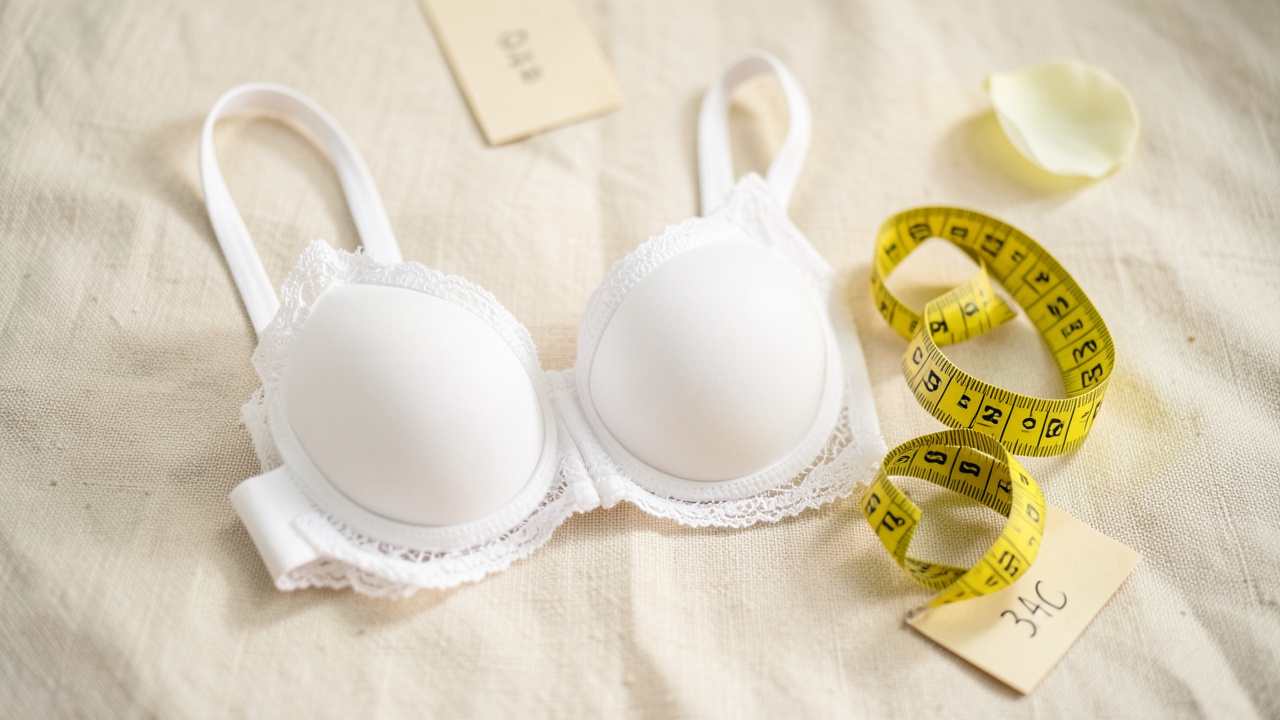
Finding the right size involves two simple measurements and a bit of common sense. You will need a soft measuring tape and a non-padded bra to start.
- Measure your band size. Wrap the tape snugly around your rib cage, directly under your bust. Make sure the tape is level and tight. Round to the nearest whole number. If the number is even, add 4 inches. If it is odd, add 5 inches. This is your band size.
- Measure your bust size. Wrap the tape around the fullest part of your bust. Make sure the tape is level but not tight. Round to the nearest whole number.
- Calculate your cup size. Subtract your band size from your bust size. Each inch of difference represents one cup size. For example, a 1-inch difference is an A cup. A 3-inch difference is a C cup. A 5-inch difference is a DD cup.
- Check the center gore. Put the bra on and check the bridge between the cups. It must sit flat against your sternum. If it floats or tilts, go up a cup size.
- Check the band. The band should be snug on the loosest hook. You should only be able to pull it about 1-2 inches away from your back. If you can pull it further, you need a smaller band.
Warning: Do not use the outdated method of adding 4 inches to your underbust measurement unless you are using a vintage sizing chart. Modern bras have stretchy bands. Adding too much results in a band that is too loose and underwires that dig into your shoulders.
Scoop and Swoop Method
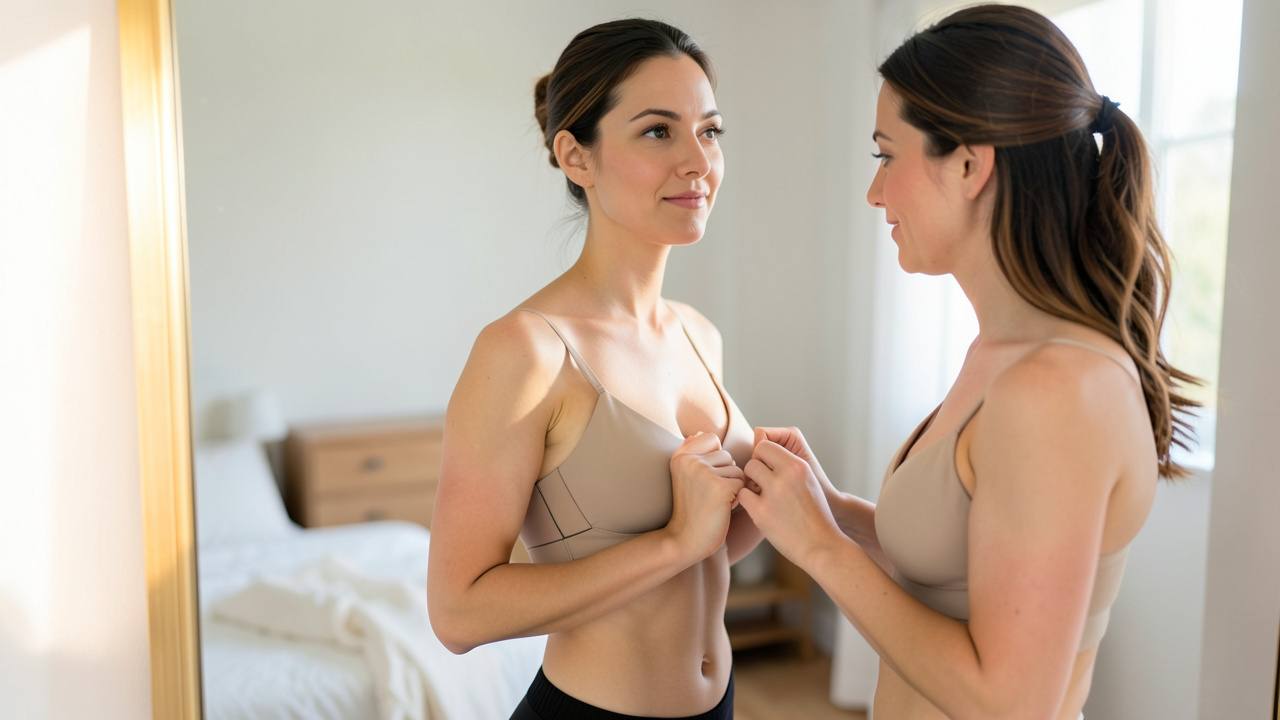
You cannot just pull a bra on and expect it to fit. You need to manually place your breast tissue into the cups. Lean forward slightly. Reach your opposite hand into the cup from the top. Scoop all the tissue from under your arm forward and upward into the cup. Do this on both sides. This ensures the underwire sits directly in your breast crease and provides maximum lift.
Pro Tips for Comfort and Fit
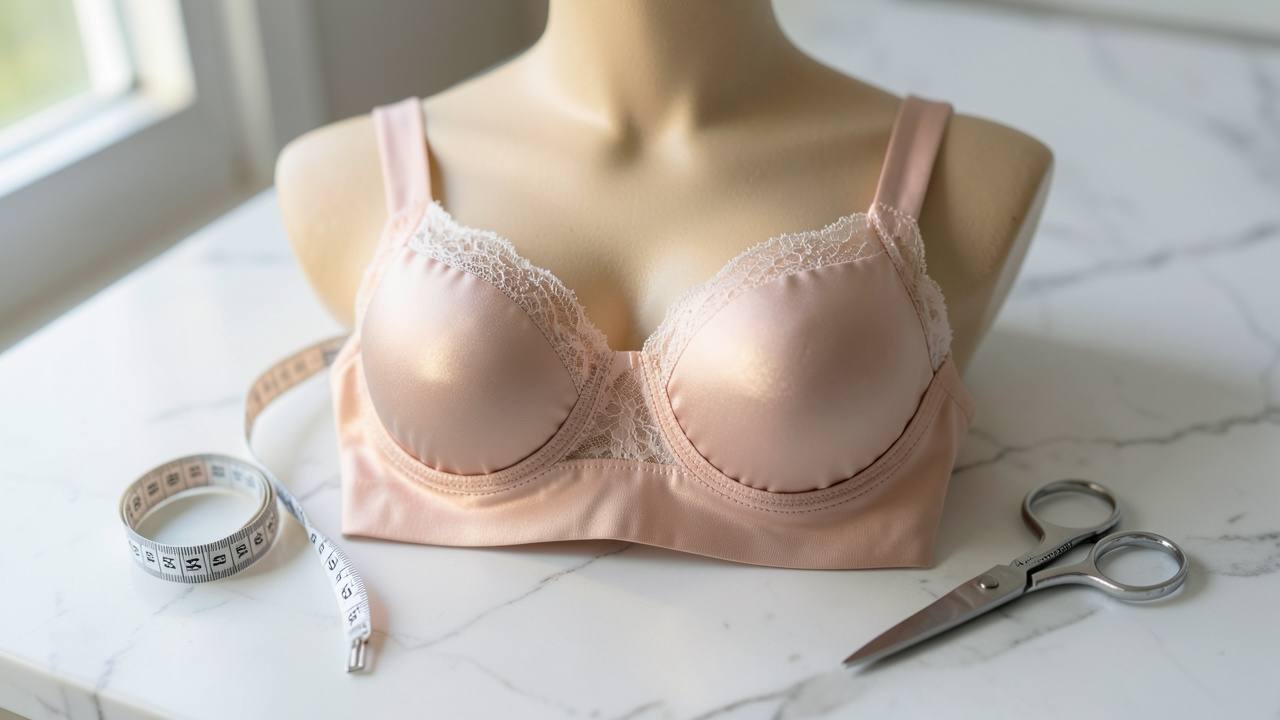
Even with the right size, small details can make a huge difference in how your bra feels. These tips come directly from professional fitters and the online fitting community known as A Bra That Fits.
- Rotate your bras. Do not wear the same underwire bra two days in a row. The elastic needs 24-48 hours to recover its shape. Rotating between 3-4 bras extends their lifespan significantly.
- Hand wash your bras. The washing machine is the number one cause of broken underwires. The agitation snaps the wire at the center gore. Hand wash your bras in cold water with a gentle lingerie soap and lay them flat to dry.
- Check the wire channel. Before buying a bra, feel the channel where the wire sits. It should be thick enough to fully encase the wire. A thin channel is more likely to wear through and let the wire poke out.
- Consider your breast root. Women with narrow roots need wires that are more curved. Women with wide roots need wires that extend further back toward the armpit. If the wire stabs you in the armpit, you likely need a wider wire or a different cup shape.
- Use a bra extender during PMS. Your rib cage can expand slightly due to water retention during your menstrual cycle. A bra extender gives you an extra inch of room without permanently stretching your band.
How to Put on an Underwire Bra Correctly
Most people put their bras on backward. The correct method protects the underwire and improves the fit dramatically.
- Lean forward at the waist. Let your breasts fall naturally into the cups.
- Hook the band behind your back on the loosest set of hooks.
- Stand up and reach into the cups. Perform the scoop and swoop method described above.
- Adjust the straps. They should be snug but not digging in. You should be able to slide one finger under the strap at your shoulder.
- Check the level. The band should be horizontal across your back. It should not ride up in the center.
Tip: If you struggle to hook your bra behind your back, hook it in front of your body while the cups are facing down. Then spin the bra around and pull the cups up into place. This is a common trick used by professional fitters.
Frequently Asked Questions
Why does the underwire in my bra poke my armpit?
This usually means your cup size is too small or your band size is too large. A too-small cup pushes breast tissue into your armpit, which forces the wire outward. Try going up a cup size or down a band size. You may also need a balconette style if you have a wide root.
How do I know if my underwire bra fits correctly?
Check three key points. First, the center gore must lie flat against your sternum. Second, the band should be level across your back and not ride up. Third, the underwire should fully encircle your breast tissue without pinching or digging in at the front or sides.
How often should I replace my underwire bras?
Most underwire bras last about 6-9 months with regular wear. If the underwire starts poking through the fabric or the band stretches out, it is time to replace the bra. Rotating your bras and hand washing them can extend their life to over a year.
What is the difference between US and UK bra cup sizes?
US and UK sizing differ mostly in DD+ cup sizes. A US DDD cup is equivalent to a UK E cup. Many international brands that specialize in larger busts, such as Panache and Freya, use UK sizing. UK sizing often offers more consistent scaling in larger cup sizes than US sizing.
Can a tailor fix a bra that has a broken underwire?
Sometimes, but it is often not worth it. A tailor can replace the wire if the channel is intact. However, if the wire snapped because the tissue is too heavy for the bra, the new wire will likely snap too. It is usually more cost-effective to buy a new bra in a better size.
Final Thoughts
Underwire bra cups are a feat of engineering that provide unmatched support and shape when fitted correctly. Focus on finding the right band size and cup shape for your specific breast type. A good underwire bra is a game-changer for your comfort and the way your clothes fit, so invest time in getting it right.