Underwear Organizers for Small Apartments: A Complete Guide
The most efficient underwear organizers for small apartments are drawer dividers, hanging fabric shelves, and roll-up methods, as they maximize vertical space and keep items visible without taking up extra room. Drawer dividers allow full use of shallow dresser drawers, while hanging organizers triple storage in the same closet footprint by leveraging unused vertical space. Rolling underwear instead of stacking it reduces volume by roughly 30 percent and makes individual pieces easy to retrieve without disrupting the rest.
Small apartment dressers and closets leave little room for bulky storage solutions. This guide covers the best underwear organizers and methods to keep your intimate apparel neat without taking up valuable space.
Quick Verdict: The most effective underwear organizers for small apartments are drawer dividers, hanging fabric shelves, and rolling storage methods. These options maximize vertical space in tight drawers and closets while keeping every item visible and accessible. Your choice depends on drawer depth, closet configuration, and how you prefer to store your underwear.
Key Takeaways
- Drawer dividers are the most space-efficient option for small apartment dressers, allowing you to use every inch of shallow drawers without piling items on top of each other.
- Hanging fabric organizers can store up to three times more underwear than traditional stacking methods in the same closet footprint.
- Rolling underwear instead of folding it reduces volume by approximately 30 percent and makes individual items easier to pull out without disturbing the rest.
- Magnetic organizers mounted on an interior closet door provide a zero-footprint solution for apartments with no extra drawer space at all.
- Compression storage bags for seasonal underwear can reduce bulk by up to 50 percent when storing pieces you do not wear regularly.
What to Look for in an Underwear Organizer for Small Apartments
Finding the right underwear organizers for small apartments means looking at three main factors: size, material, and configuration. Each affects how well the organizer fits your space and keeps your items tidy.
Size and Dimensions
Measure your drawer depth, width, and height before buying anything. Standard dresser drawers are 5 to 7 inches deep. Shallow drawers work best with low-profile dividers that sit flat. Deep drawers can handle stackable bins or multi-tier inserts.
- Measure the inside of your drawer, not the outside. The organizer must fit within the interior dimensions.
- Check the height clearance. A divider that is too tall will stop the drawer from closing.
- Look for expandable dividers that adjust from 12 to 20 inches wide. These fit most standard dresser drawers.
Important: Always leave at least half an inch of space on each side of the drawer for the drawer slide mechanism.
Material Options
The material you choose affects durability, grip, and how easy the organizer is to clean.
| Material | Best For | Durability | Typical Cost |
|---|---|---|---|
| Velvet-lined plastic | Delicate fabrics that need grip | High – velvet coating lasts years | $10 – $30 per set |
| Natural bamboo | Eco-friendly and open shelving | Very high – bamboo resists moisture | $15 – $40 per piece |
| Fabric and mesh | Hanging organizers and travel | Medium – may sag over time | $8 – $25 each |
| Acrylic clear | Visible stacking in deep drawers | High – scratch-resistant plastic | $12 – $35 per set |
Configurations That Save Space
Different configurations work for different types of underwear. Consider what you own before picking a style.
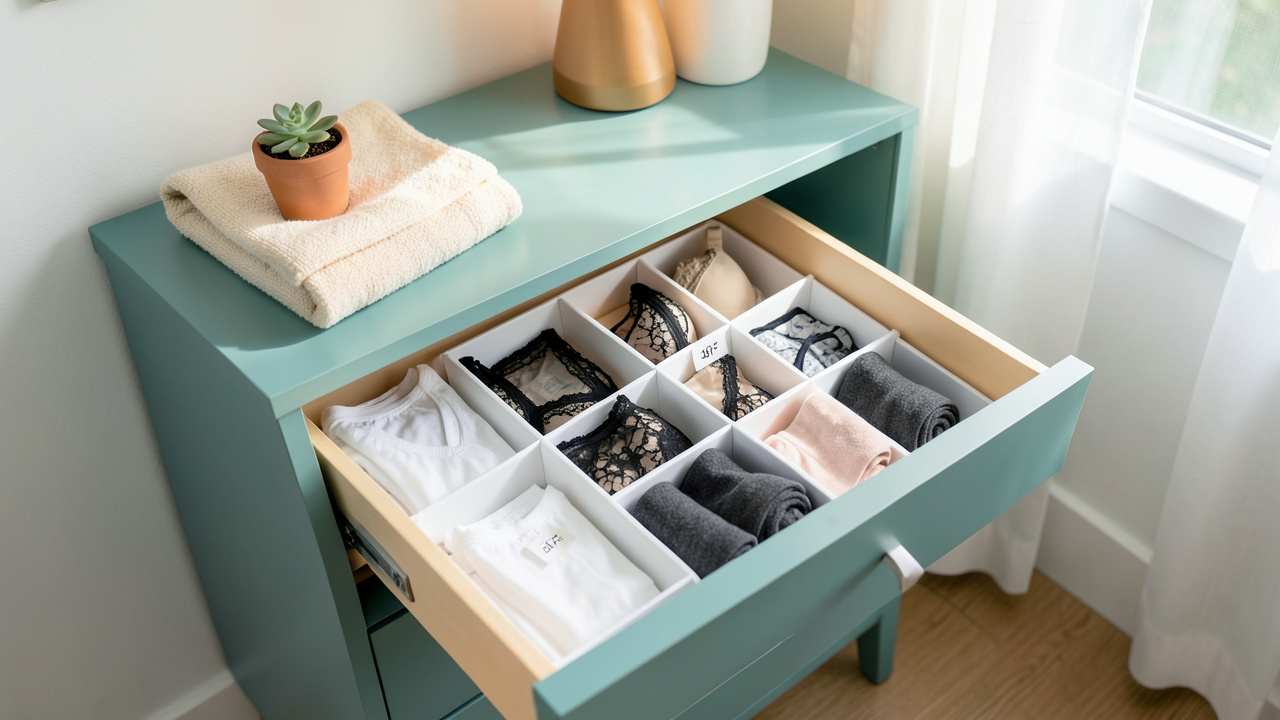
- Grid dividers work best for briefs and boxers that fold flat into square compartments.
- Long rectangular bins fit socks and rolled underwear side by side without wasted space.
- Multi-tier stackable trays use vertical space inside deep drawers for two layers of storage.
- Hanging shelves with small compartments work for closets without dresser drawers.
Types of Underwear Organizers That Work in Small Spaces
There are five main types of underwear organizers for small apartments that solve common storage problems. Each has specific strengths and weaknesses.
Drawer Dividers and Inserts
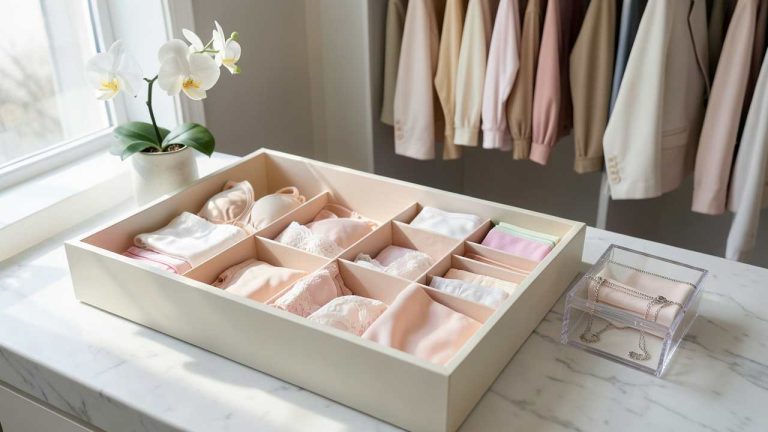
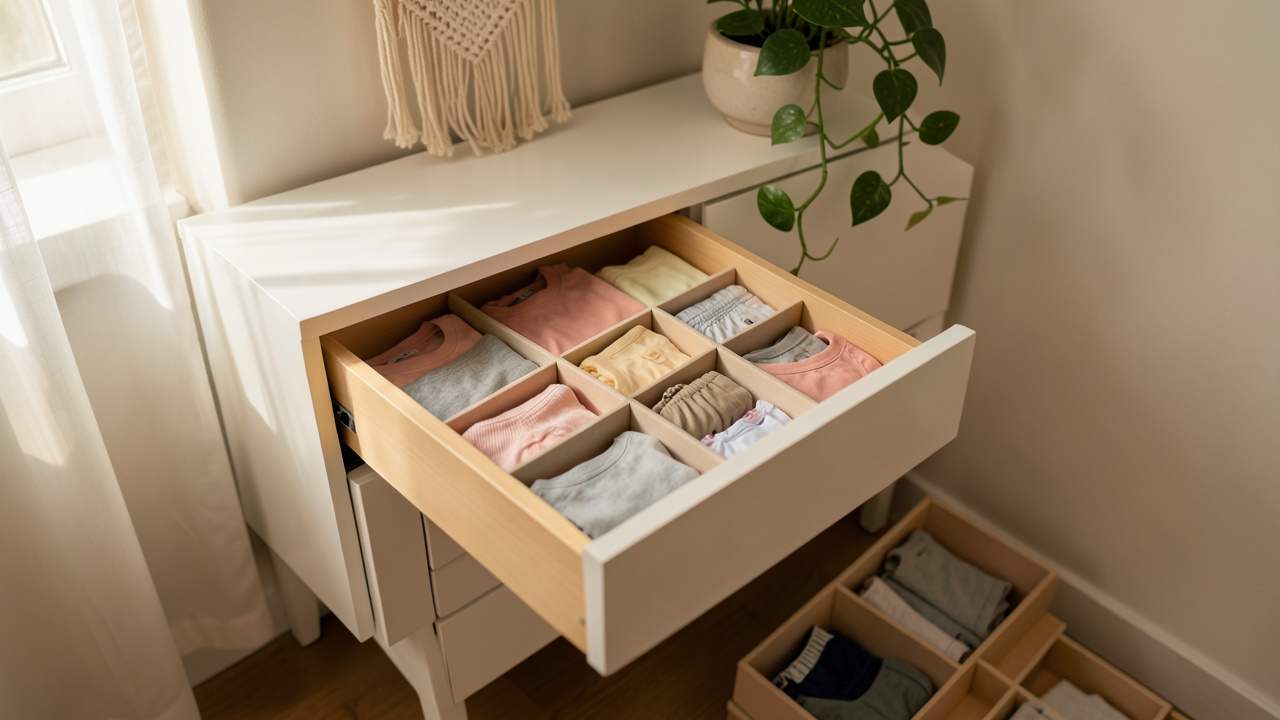
Drawer dividers are adjustable panels or fixed inserts that split a single drawer into separate sections. They are the most popular choice for small apartments because they use existing furniture without adding bulk.
- Pros: Zero floor or closet space needed, fits most standard drawers, keeps items separated by type.
- Cons: Only works if you have a dresser, limited to shallow items if your drawer is not deep.
- Best for: Anyone with a dresser who wants to organize multiple types of underwear in one drawer.
Warning: Avoid cheap plastic dividers that are too thin. They can snap under the weight of packed clothing and leave you with a messy drawer.
Hanging Fabric Organizers
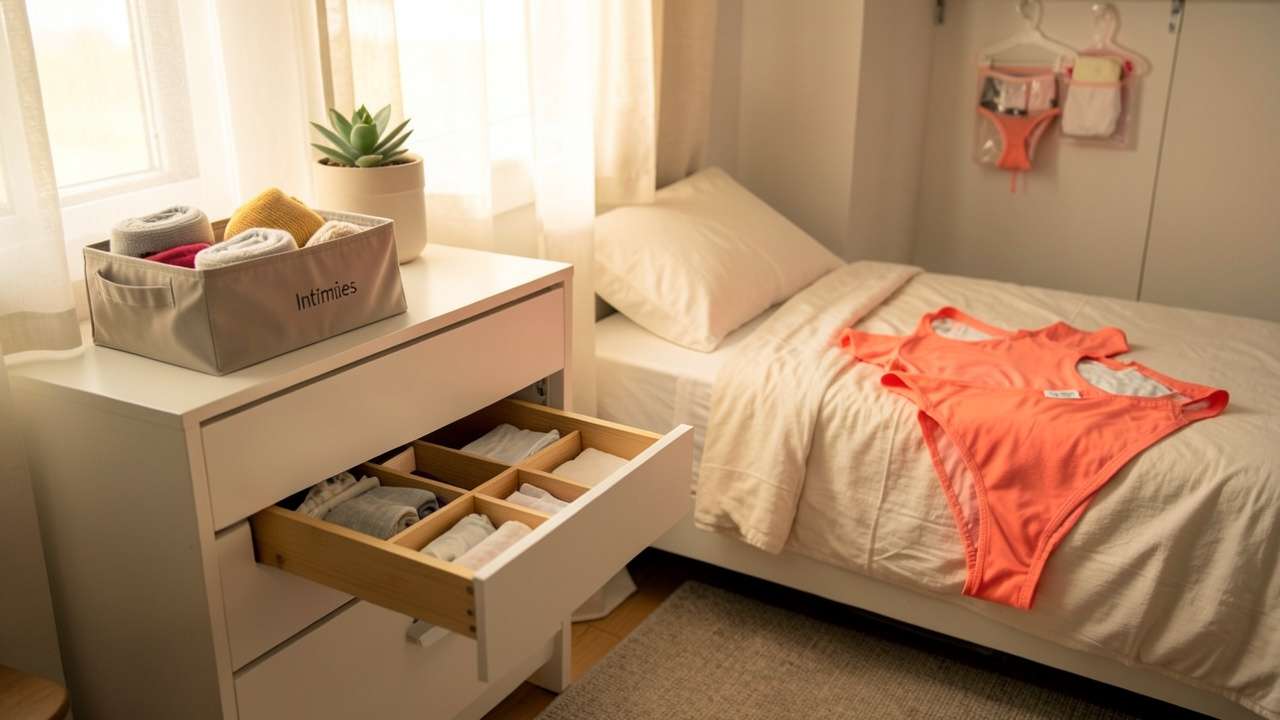
Hanging organizers attach to a closet rod and provide multiple fabric compartments stacked vertically. They are ideal for underwear organizers for small apartments that lack dresser space.
- Pros: Uses vertical closet space, portable, can hold large amounts of underwear and accessories.
- Cons: Requires a closet rod, items can get jumbled if compartments are too large, fabric can sag over time.
- Best for: Studio apartments and rooms with closets but no dresser.
Roll-Up and Travel Organizers
These are compact cases or rolls with elastic bands or zippered sections that hold underwear in place. Many are designed for travel but work equally well in small apartment drawers.
- Pros: Extremely space-efficient, portable, keeps items tightly packed without shifting.
- Cons: Limited capacity for larger items, best for rolled underwear only.
- Best for: People who prefer the rolling method and want grab-and-go access.
Magnetic and Door-Mounted Organizers
Magnetic strips with small metal clips or adhesive-backed mesh pockets attach to the inside of closet doors. They use zero floor or drawer space.
- Pros: Zero footprint, keeps items visible and accessible, easy to install.
- Cons: Limited to lighter items, adhesive may fail in humid bathrooms, not suitable for heavy denim or thick fabrics.
- Best for: Extreme space-saving in micro-apartments or shared rooms.
DIY Cardboard Dividers
You can make custom dividers from sturdy cardboard boxes or presentation boards. This is the cheapest option for underwear organizers for small apartments on a tight budget.
- Pros: Almost free, fully customizable to your exact drawer dimensions, recyclable.
- Cons: Less durable than store-bought options, may need replacement every few months, not water-resistant.
- Best for: Temporary setups, students, or anyone testing a layout before buying permanent organizers.
How to Choose the Best Organizer for Your Situation
Your choice depends on three things: your available storage, the types of underwear you own, and your budget. Use this decision guide to narrow down your options.
- Check your storage space. Measure drawer depth, closet rod availability, and door clearance. If you have no dresser, skip drawer dividers and go straight to hanging organizers or door-mounted options.
- Count your underwear types. If you own briefs, boxers, thongs, and sports bras all in one drawer, grid dividers with separate compartments work best. If you own mostly one type, simple bins or rolls are sufficient.
- Set a budget. DIY cardboard dividers cost nothing. Basic mesh hanging organizers cost around $10. High-end bamboo drawer inserts can cost $40 or more per section. Pick what fits your wallet.
- Consider long-term durability. If you plan to stay in your apartment for years, invest in velvet-lined or bamboo dividers. If you move often, stick with lightweight fabric organizers that pack flat.
Tip: Start with one drawer and one type of organizer. Test the system for two weeks. Adjust as needed before buying organizers for your other drawers.
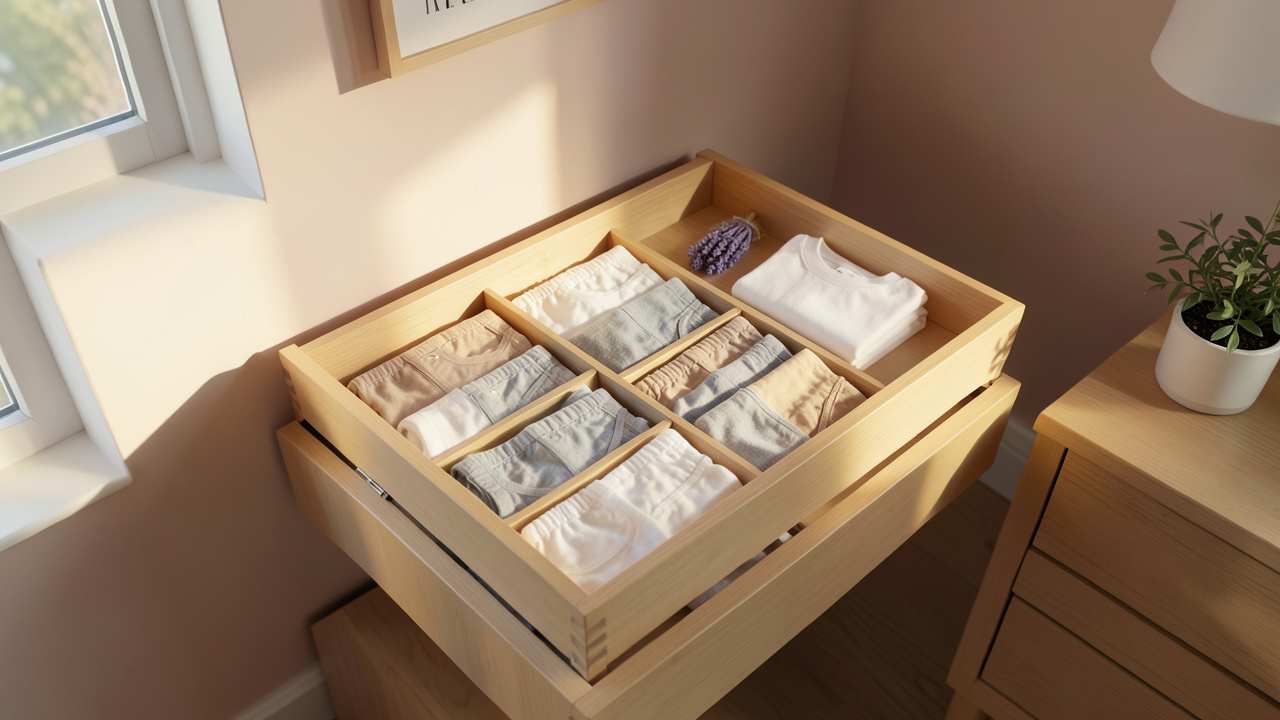
Step-by-Step Process to Organize Your Underwear Drawer
Follow these steps to set up your underwear organizers for small apartments and keep them working long-term.
Step 1 – Empty and Sort Everything
Take every piece of underwear out of your drawer. Sort them into piles by type (briefs, boxers, thongs, sports bras, socks). Discard any items that are worn out, stretched, or uncomfortable.
Step 2 – Choose Your Storage Method
Based on your space and types, pick one primary method. Drawer dividers for dressers. Hanging organizers for closets. Roll-up cases for small drawers or travel.
Step 3 – Measure Your Space
Use a tape measure to get the exact inside dimensions of your drawer or closet area. Write these numbers down. Compare them to the product dimensions of the organizer you have chosen.
Step 4 – Install or Place Organizers
Place dividers inside your drawer and adjust them until they fit snugly. For hanging organizers, attach them to the closet rod and distribute the compartments evenly.
Step 5 – Fold, Roll, and Arrange
Fold or roll each piece of underwear using the method that matches your organizer. Place each type in its own compartment. Group similar colors or patterns together for easy matching.
- Fold sports bras flat and stack them upright in deep compartments.
- Roll briefs and boxers into tight cylinders and place them in grid sections.
- Fold thongs into small rectangles and stack them in shallow bins.
- Place socks in pairs and store them next to their matching underwear type.
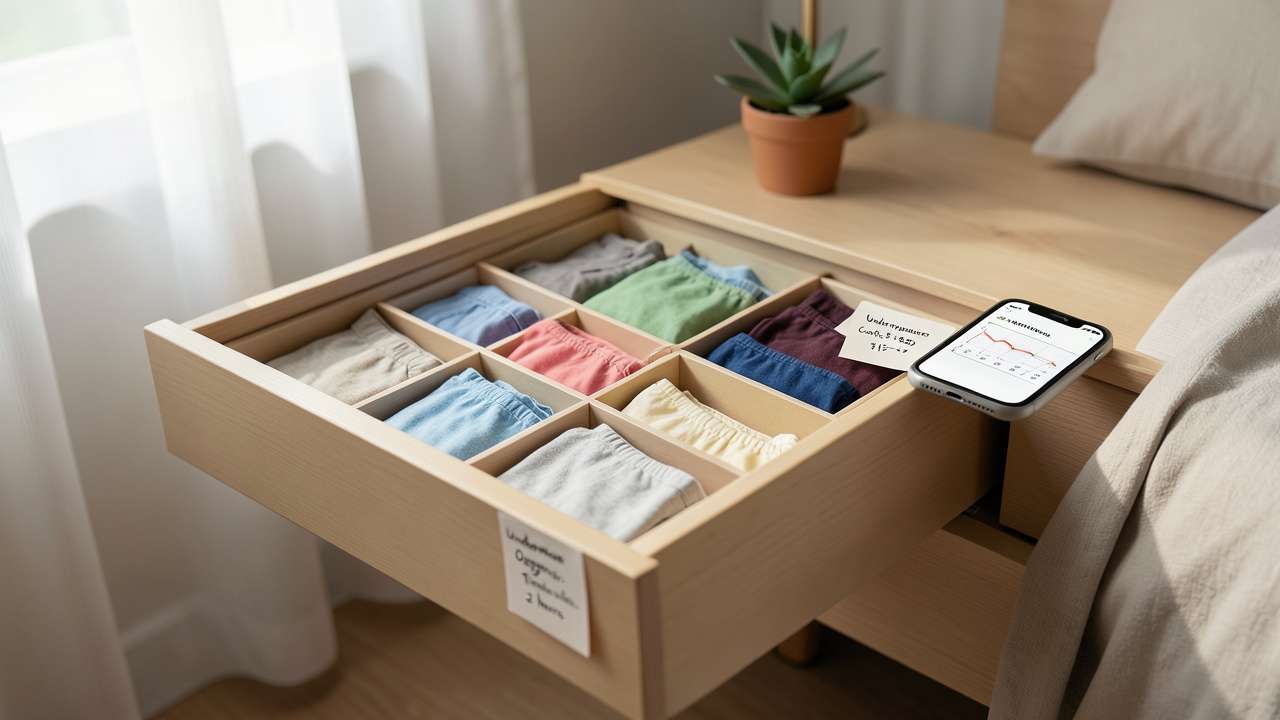
Costs and Timeline for Underwear Organizers
Setting up your underwear organizers for small apartments does not have to be expensive. Here is what you can expect to pay and how long each option lasts.
| Organizer Type | Typical Cost | Setup Time | Expected Lifespan |
|---|---|---|---|
| Drawer dividers | $10 – $40 | 10 – 20 minutes | 3 – 5 years |
| Hanging organizer | $8 – $30 | 5 – 10 minutes | 2 – 4 years |
| Roll-up case | $5 – $20 | 5 minutes | 1 – 3 years |
| Magnetic/door mount | $5 – $15 | 2 – 5 minutes | 1 – 2 years |
| DIY cardboard | $0 – $5 | 20 – 40 minutes | 3 – 6 months |
Common Myths vs Facts About Underwear Storage
Many people believe outdated ideas about organizing underwear in small spaces. Here are the most common myths and the real facts.
Myth 1 – You Need a Big Dresser with Deep Drawers
Many apartment dwellers think shallow or narrow drawers cannot hold organized underwear. The truth is that shallow drawers actually work better for underwear organizers for small apartments. Low-profile dividers and rolling methods turn a 5-inch deep drawer into a fully organized space. You can store just as many items with careful folding as you would in a deep drawer with stacking.
Myth 2 – Folding Is Always Better Than Rolling
Some people insist that traditional flat folding is the only proper way to store underwear. Rolling is actually more space-efficient in most small apartment setups. According to professional organizers, rolling reduces volume by up to 30 percent and makes each item accessible without disturbing the pile.
Myth 3 – Expensive Organizers Are Always Better
There is a widespread belief that you must spend $50 or more on branded organizers to get results. The fact is that cheap DIY cardboard dividers and budget fabric organizers work just as well for most people. The key is good measurements and consistent habits, not the price tag.
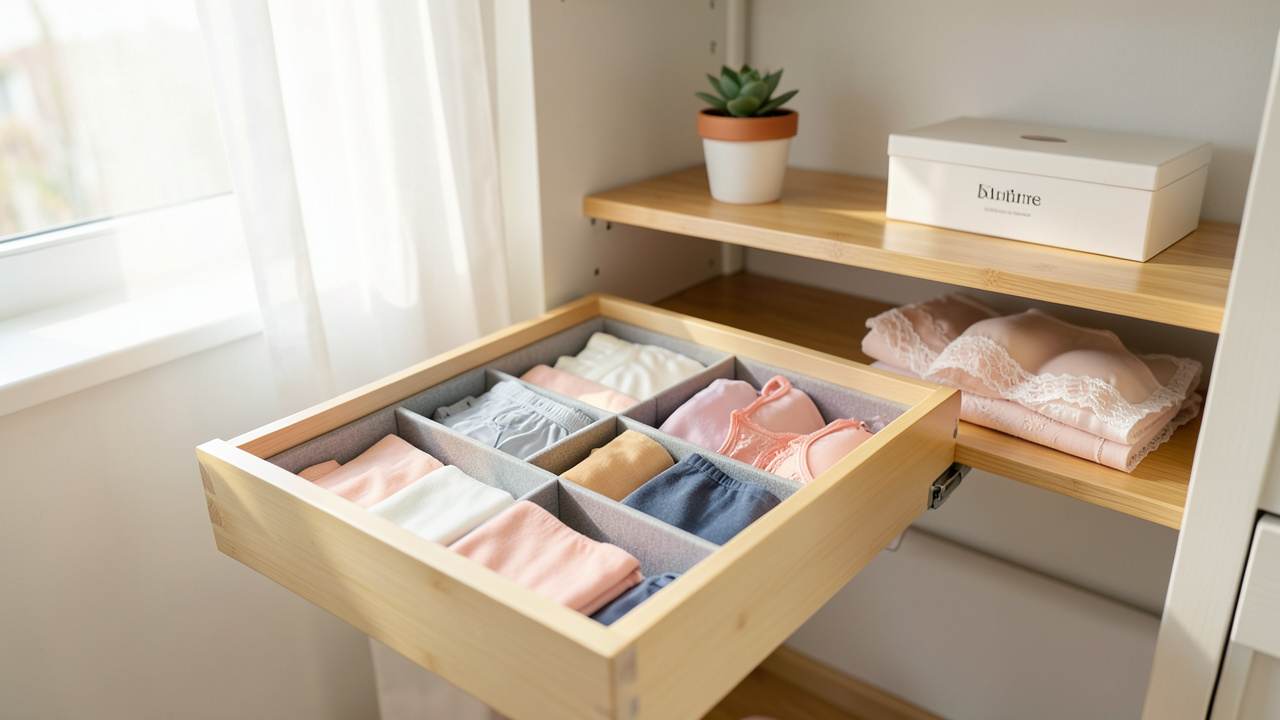
Pro Tips for Long-Lasting Organization
Keep your underwear organizers for small apartments working well for months and years with these pro tips.
- Purge your underwear collection every six months. Remove anything with stretched elastic, stains, or worn fabric. Less clutter means easier organization.
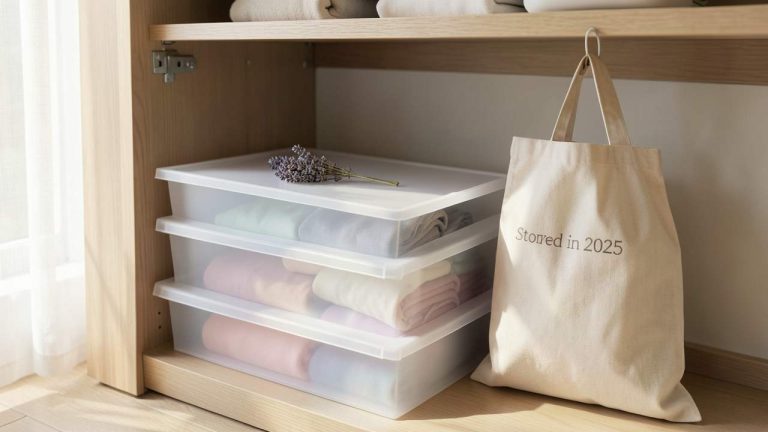
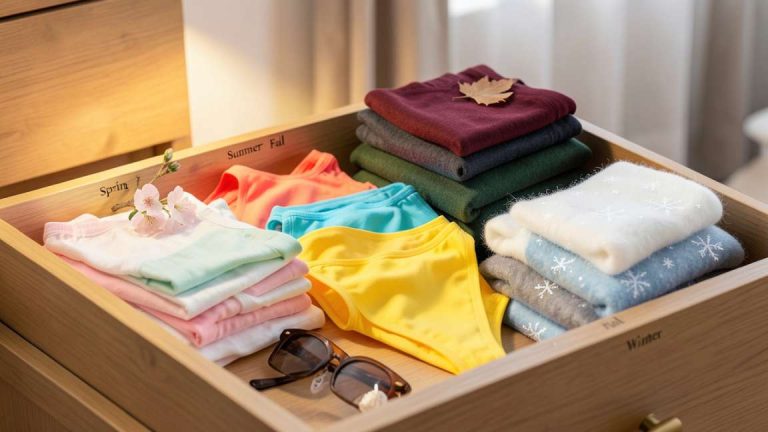
- Store off-season underwear separately. Use a compression bag under your bed or on a high closet shelf for thermal underwear or heavy pairs you only wear three months a year.
- Label each compartment from the start. A small piece of masking tape and a marker help you remember which section holds what. This keeps the system intact after laundry day.
- Use drawer liner grips under your organizers. Non-slip liners prevent dividers from sliding around when you open and close the drawer.
- Rotate your stock regularly. Put freshly laundered pieces at the bottom of each compartment and pull from the top. This ensures even wear across your entire collection.
Important: Once every three months, empty your drawers completely, wipe them down with a damp cloth, and reassess your organization system. Habits change, and your organizer should change with them.
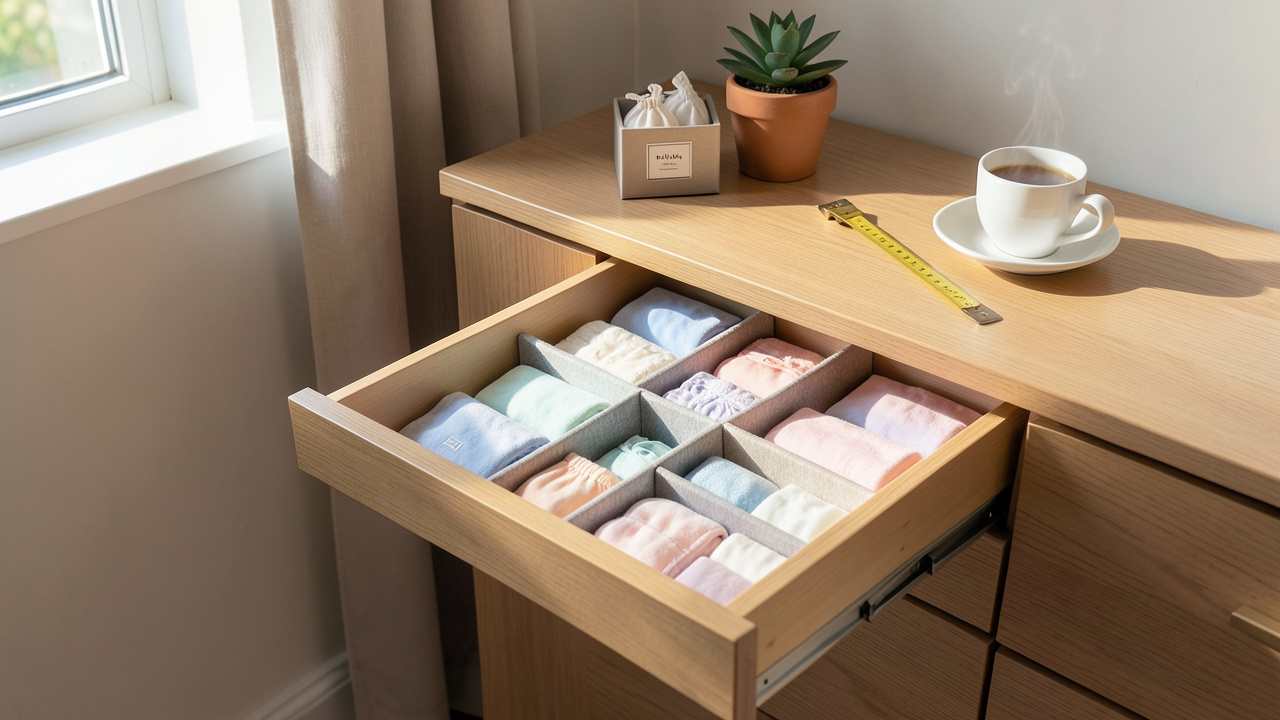
Resources and Tools
These are the most reliable tools and brands for underwear organizers for small apartments. Each offers durable products that work well in tight spaces.
- IKEA SKUBB Box Set – A set of six fabric boxes with compartments designed for drawer organization. They come in multiple sizes and fit standard dresser drawers.
- The Container Store Drawer Dividers – Expandable bamboo and acrylic dividers with custom sizing options. Their velvet-lined versions are popular for delicate fabrics.
- Amazon Basics Fabric Storage Cubes – Affordable mesh and fabric cubes that work for both drawers and shelves. Available in multi-packs for budget-friendly setups.
- Marie Kondo KonMari Folding Guide – The official guide from Marie Kondo on her signature folding method. This technique is specifically designed to maximize drawer space in small homes.
- Eagle Creek Pack-It Compression Bags – High-quality compression storage bags for seasonal underwear and accessories. They reduce bulk without needing a vacuum.
Frequently Asked Questions
What is the best type of underwear organizer for a small apartment with no dresser?
A hanging fabric organizer is your best option if you have no dresser. It uses your closet rod for vertical storage and keeps all your underwear visible. Look for one with at least six compartments to separate different types.
How do I organize underwear in a shallow drawer?
Use low-profile drawer dividers that sit flat in the drawer. Roll each piece of underwear tightly so it stands upright. This method uses vertical space inside a shallow drawer without needing height.
Can I use a shoe organizer for underwear?
Yes, an over-the-door shoe organizer with clear pockets works well for lightweight underwear and socks. Each pocket holds one or two rolled pairs. This is a common hack among small apartment dwellers.
How often should I replace my underwear organizers?
Replace fabric organizers every two to three years as the material sags. Bamboo and plastic dividers last much longer, typically five years or more. Replace cardboard dividers every three to six months when they start to lose shape.
Does the KonMari folding method really work for small apartment drawers?
Yes, the KonMari method is one of the most effective techniques for small apartment storage. It involves folding items into small rectangles and standing them upright in the drawer. This lets you see every piece at a glance and maximizes drawer space.
Final Thoughts
Small apartment living requires smart storage choices, and underwear organizers for small apartments are one of the easiest upgrades you can make. Drawer dividers, hanging organizers, and rolling methods each solve specific space problems without taking up extra room. Start by measuring your space, pick one method, and refine your system over time. A well-organized drawer saves you time every single day.